
Equipment Idle Time Tracking: How Telematics Measures It and How to Cut It
How telematics measures idle time on excavators, loaders and other heavy equipment, what idle share is normal, OEM AEMP data versus aftermarket trackers, wiring that makes idle reports accurate, and how fleets cut idle time.
Winnie Huang
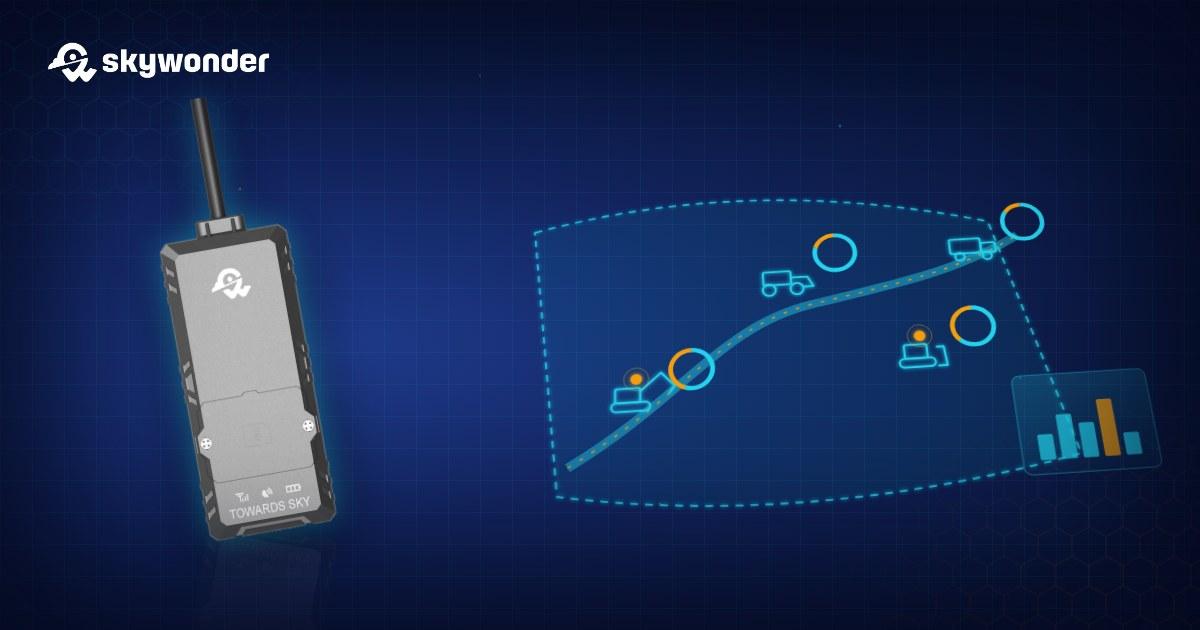
Short answer: Equipment idle time tracking measures engine running time when the machine does no work. Telematics gets the figure in one of three ways: the machine maker's own telematics, an aftermarket tracker wired to the ignition and a work signal, or engine data read from the machine's data network. Manufacturer data reported by Construction Equipment (2020) puts idle at 28 to 38 per cent of engine hours; fleets that manage idling aim for about 20 per cent.
Last updated: 19 November 2026. By Winnie Huang, Solution Manager at SKYWONDER, which has built GPS trackers in Shenzhen since 2011.
An excavator with its engine running and its bucket on the ground looks busy from the site office. The hour meter keeps counting and the fuel tank keeps emptying, and nobody notices until someone compares the hour meter with the work done.
This guide explains how idle time is measured and which hardware we would fit on which machine, for fleet and plant managers who want idle numbers they can check, and the resellers who sell them.
What counts as idle time on heavy equipment?
Idle time is the share of engine-on time when the machine is not doing productive work. For a truck that is easy: engine on, wheels not turning. An excavator, a loader or a generator is harder, because it can work hard without moving an inch.
Keep three figures apart in any telematics report:
- Engine hours: total time the engine ran. This is what the hour meter shows.
- Working hours: engine time under load (hydraulics active, power take-off engaged, travel, digging). The power take-off (PTO) is the drive that powers an attachment, pump or implement.
- Idle hours: engine hours minus working hours. The idle percentage is idle hours divided by engine hours.
Where a system gets its "working" signal decides whether its idle figure is useful. A tracker that only sees key-on and zero speed calls a digging excavator "idle".
Aftermarket trackers learn that the engine is on from the ACC wire. ACC is the accessory or ignition-switched feed, which is live only while the key is on.
Machine makers (OEMs, original equipment manufacturers) often fit their own telematics. Some aftermarket devices also read engine data such as RPM, load and fuel rate from the CAN bus (controller area network, the machine's internal data network). None of our models reads CAN engine data. On our trackers, engine hours come from ACC time, and idle is engine-on time while stationary unless a work signal or OEM data says otherwise.
How much idle time is normal for construction equipment?
Published fleet data puts idle time at 28 to 38 per cent of engine hours. A Construction Equipment report (March 2020) collected these figures from manufacturers. They are the most recent manufacturer figures we found:
- Volvo CE estimated 28 to 30 per cent idle time for a large construction fleet of about 450 machines.
- Komatsu put the average idle time of its machines in North America at 38 per cent, based on about 75,000 machines.
- One manufacturer's data showed a 36-ton excavator in North America running about 1,000 hours a year. It idled about 40 per cent of that time and burned about a gallon (about 3.8 litres) of fuel per idle hour: some 400 gallons (about 1,500 litres) a year.
The same report notes that owners who actively manage idling "shoot for about 20 percent". It also says acceptable idle time "is not a settled issue".
Cold climates, attachment warm-up and safety rules can push idle time up, so treat the managed-fleet share as a target to work towards.
What does idle time cost you?
Fuel is the visible cost: a 36-ton excavator idling 400 hours a year burned about 400 gallons (about 1,500 litres) a year standing still, according to the Construction Equipment report. Idle hours also add to the hour meter, which drives service intervals, warranty expiry and resale value.
The report quotes fleet managers saying many new machines "use up the hour-terms of their warranties just idling". It adds that residual value "might be the most expensive consequence of idling time".
Size the cost for your own fleet with these variables:
- E = engine hours per machine per year
- I = idle share today (for example 0.40)
- T = target idle share (for example 0.20)
- F = fuel burned per idle hour, from your own fuel data or the OEM
- N = number of machines
Removing idle time also removes engine hours, so the target share applies to a smaller total. Working hours stay at E × (1 − I), and the formula allows for that.
Idle hours removed per year = E × (I − T) ÷ (1 − T) × N. Fuel saved per year = idle hours removed × F.
With the report's figures (E = 1,000, I = 0.40, T = 0.20, F = 1 gallon), each machine sheds 250 hours and about 250 gallons (about 950 litres) a year. Engine hours fall from 1,000 to 750, and the 150 idle hours left meet the target share of the new total.
Then price the fuel and the 250 hour-meter hours at your own rates.
Which telematics platforms track equipment idle time: OEM, AEMP 2.0 or aftermarket?
Factory telematics usually gives the most detailed idle data, because it reads the machine's own controller. The AEMP 2.0 standard lets you pull that data from several brands into one fleet system, instead of logging into each brand's portal.
AEMP is the Association of Equipment Management Professionals, and AEMP 2.0 is published as ISO/TS 15143-3. Geotab describes AEMP 2.0 as a basic protocol and API for viewing different manufacturers' data in one place. The data set includes operating hours, idle hours and fuel used.
Geotab's own release says "not all heavy equipment OEMs utilize the AEMP 2.0 standard".
Proemion's mixed-fleet guide adds that the data available through ISO/TS 15143-3 is limited and that OEMs provide different signals for different models.
Plan on older machines, small brands, compressors, light towers and attachments having no factory feed until you confirm otherwise for each one.
| Method | What it measures well | Where it falls short | Best for |
|---|---|---|---|
| OEM portal or AEMP 2.0 / ISO/TS 15143-3 feed | Engine hours, idle hours and fuel used from the machine's own controller | Only machines whose OEM supports it; signals differ by model; update intervals vary | Newer machines from large OEMs |
| Aftermarket wired tracker (ignition + work signal) | Engine-on time from ACC, location, geofence, theft alerts; idle if a work signal is wired | Idle accuracy depends on the work signal you wire; no engine data or fault codes | Mixed and older fleets, rental, small contractors |
| Third-party CAN telematics device (we do not make one) | RPM, engine load, fuel rate and idle from the engine itself | Needs a CAN-capable device and the right connector for each brand | Fleets that want engine data on machines without an AEMP feed |
| Battery asset tracker (no wiring) | Location and movement for unpowered assets | Cannot measure engine or idle time | Attachments, trailers, containers, theft recovery |
For a mixed fleet, use AEMP data where it exists, wired trackers on everything else, and battery trackers on attachments. Put all of it in one platform, report OEM idle and tracker "engine on while stationary" in separate columns, and compare like with like. Our fleet management solution page lists what we supply for this.
Why do idle reports from GPS trackers often look wrong?
Idle reports look wrong when the tracker's idle rule does not match how the machine works. Check these three wiring and setup points first:
- The ACC wire is on a constant-live feed. The tracker then thinks the engine runs 24 hours a day. Wire ACC to a line that is live only when the ignition is on.
- Key-on is treated as engine-on. An operator can leave the key on with the engine stopped, and the ACC line stays live. Supply voltage can separate the two. As a rule of thumb, a 12 V system rests at about 12.6 V and reads 13.8–14.4 V while the alternator charges. A typical 24 V system rests at about 25.2 V and reads 27.6–28.8 V while charging. Ask us whether the firmware on your model can apply a voltage threshold to the engine-on rule.
- Zero speed is treated as zero work. An excavator digging, a crane lifting or a pump running never moves, so a rule based on speed counts all of it as idle. The fix is a work signal or OEM data (see step 3 of the setup below).
In Traqcare, our GPS tracking software, the Idle report counts time with the ignition on and the machine stationary. The Idle and Stops reports list each event so you can see what was counted.
On machines that work while standing (excavators, pumps, cranes), that figure includes work time, so treat it as "engine on while stationary".
What does an equipment utilisation report show?
A utilisation report (utilization in US reports) compares the hours a machine ran with the hours it was available. Call the available shift hours A. Engine utilisation is engine hours ÷ A, and working utilisation is working hours ÷ A. The gap between the two is idle.
As an illustration, a machine on 8-hour shifts for 250 days has A = 2,000 hours. If it logs 1,000 engine hours and 600 working hours, engine utilisation is 50 per cent and working utilisation 30 per cent. A low engine figure points to a machine the fleet may not need; a large gap between the two points to idle. On a tracker without a work signal, only the engine figure is reliable.
Which GPS trackers and sensors suit heavy equipment?
Fit a wired 4G tracker to any machine with an engine, including engine-driven light towers and generators, and a battery tracker to assets with no engine or power feed. The four wired models below (J10, J11, GX7, H8) run on 9–90 V DC, which covers 12 V and 24 V machines.
| Model | Network | Power | Signals for idle and usage | Fits |
|---|---|---|---|---|
| J10 | 2G (GPRS) | Wired, 9–90 V DC | ACC on/off status, remote fuel cut-off ("fuel checking" on the product page), power-cut alarm | Existing 2G fleets; not our default for new fleets |
| J11 | 4G (per product page) | Wired, 9–90 V DC | ACC status reporting, fuel cut-off and restore, dual IP (primary and backup server) | Fleets that need a backup server: it switches to a second server IP if the primary fails |
| GX7 | 4G | Wired, 9–90 V DC | 1 ACC detection input, relay cut-off output | Machines where you want engine-on time plus a remote immobiliser |
| H8 | 4G | Wired, 9–90 V DC, waterproof housing, −20 to 70 °C | 1 ACC input, relay output, Bluetooth, optional TTL/RS485 port (RS485 is a two-wire serial link) for sensors such as fuel level | Machines that need a fuel level or load sensor on top of ignition time |
| W09 | 4G Cat 1 (LTE B1/B2/B3/B4/B5/B7/B8/B28/B66, no B20) with 2G fallback | Battery (non-rechargeable cells), up to three years standby | Location and movement only | Attachments and trailers where it can sit sheltered (toolbox, chassis box), as the spec lists no IP rating |
| W10 | 4G Cat 1 with GPRS fallback | Rechargeable 6,000 mAh, IP65, magnetic, −30 to 80 °C | Location, vibration alarm (must be armed) | Exposed attachments such as breakers and buckets |
| GT76 | 2G (MT2503 module) | Battery, 20,000 mAh, magnetic mount | Location, light-sensor removal alarm | Hidden second unit on high-value machines where 2G still runs |
| Y8 | 4G (LTE B1/B3/B5/B8 and TDD B34/B38–B41; no B20 or US B2/B4/B66, so check your carrier) | Solar charging, IP67, 15,600 mAh | Location, tamper protection | Site cabins and unpowered containers parked outdoors |
Despite the "4G" in its product name, the GT76 is 2G only, like the J10. Some carriers have switched 2G off; check your operator's dates before you buy either one.
Send a cut-off only when the machine is parked and the operator is clear; ask us how the relay behaves on your model.
Our comparison of wired and wireless GPS asset trackers covers the trade-offs. The asset tracker range lists every battery model, and our article on GPS trackers for equipment covers older machines with no tracker at all.
Can a tracker measure fuel used while idling?
For fuel, a capacitive fuel level sensor in the tank shows fuel used over a shift or a week, plus refuels and drops that look like theft. In Traqcare each tank is calibrated separately, and the Fuel Summary report shows consumption, refuels and possible theft per machine.
A tank-level sensor cannot show how much fuel one idle event burned. Per-event idle fuel needs engine fuel-rate data, which comes from OEM telematics or a CAN device.
How do you set up equipment idle time tracking so the numbers hold up?
Fit and check one machine of each type first, then copy its wiring to the rest of that type.
- List every asset by type. Engine with an AEMP feed, engine without one, or no engine. That list decides OEM feed, wired tracker or battery tracker for each one.
- Find a switched ignition line. Confirm with a meter that it is live only with the key on. Wire ACC there, never to the battery positive.
- Add a work signal where the machine works standing still. Ask us which input on your model can take a work signal (hydraulic pressure switch or PTO), and how it connects, before you plan a fleet: a pressure switch is an on/off contact, and on the H8 the RS485 port carries sensors.
- Mount for signal and tamper resistance. Keep the GPS antenna side facing the sky under a plastic panel, away from engine heat. On expensive machines, fit a hidden battery unit as a second layer.
- Agree one idle rule and use it on every machine. Count idle from a minimum duration (for example 1–2 minutes), and report long-idle events (for example over 5 minutes) separately. Check which of these settings your platform supports, so sites can be compared.
- Check one week of data against the hour meter. Engine-on hours from the tracker should closely match the meter over the same week; a large gap usually means ACC is on a constant-live feed or key-on time is being counted.
- Share the report with the people who can change it. Send it to site supervisors and operators weekly, ranked by machine, with long-idle events listed by time and place.
Choose a 4G model for new fleets because 2G is being switched off in some countries. Check the model's bands match your carrier; our article on SIM cards for GPS trackers covers the carrier side. Cat 1 (LTE Category 1) is a low-data 4G class used by IoT devices.
How do you reduce idle time once you can see it?
Work through these steps, in this order:
- Agree a target per machine type. Work towards about 20 per cent of engine hours, the figure managed fleets aim for (Construction Equipment, 2020), and set separate targets for machines that wait on others, such as a loader feeding a crusher.
- Switch on the machine's auto-idle and auto-shutdown settings. Where a machine has them, OEM telematics may show whether they are on. An aftermarket tracker cannot read machine settings, but long-idle events should fall once the settings work.
- Review idle by site, and by operator using your shift rosters. If one site idles more than the others, look for a waiting problem first, such as trucks not arriving or a blocked haul road.
- Move idle machines. A machine idling 50 per cent of the time on one job may be one another site needs.
- Track working hours alongside engine hours, and ask your dealer whether idle-heavy machines can move to fuel-burned or load-based service intervals within warranty terms.
The same approach works on farms. Our guide to GPS tracking for agriculture covers tractors and harvesters, and the agriculture solution page lists the hardware we supply for farm fleets.
How do resellers sell idle-time reporting to contractors?
Open with a monthly idle report set against engine hours, because a contractor can check it against their own fuel records and hour meters.
A typical package is a wired tracker on every engine, a battery tracker on attachments, and the monthly report under your own brand. With our reseller programme, the Traqcare platform and apps carry your logo, colours and domain.
Ordering terms: MOQ 50–100 units by product, white-label programme from 100 units, and samples 3–10 units ship in 5–7 business days by express courier. Our GPS tracker MOQ guide has the detail by model.
To size a contract, use four variables. N = units on the contract, M = your monthly fee per unit, H = your hardware margin per unit, and S = SIM and platform cost per unit per month.
Monthly recurring revenue is N × M. First-year gross margin = N × (H + 12 × (M − S)), if all units go live in month one.
If you are building this business from scratch, start with how to start a GPS tracking business, and see the white-label GPS tracker page for what can be rebranded.
Developers can use the GT06 protocol guide and the developer page. Our devices also run on Traccar, Wialon, Navixy and GPS-Trace, so you are not tied to one platform. For the wider fleet picture, read our GPS fleet management system guide.
Frequently asked questions
What is a good idle percentage for heavy equipment?
A good target is about 20 per cent of engine hours, which is what fleets that actively manage idling aim for (Construction Equipment, 2020). Fleet data from Volvo CE and Komatsu puts typical idle time at 28 to 38 per cent. Compare machines of the same type, because a loader feeding a plant idles more than a dozer cutting.
How does a GPS tracker measure idle time?
A wired tracker reads the ignition (ACC) line to know when the engine is on, and GPS to know when the machine moves. Idle is engine-on time while stationary, so excavators and pumps need a work signal or OEM data, or digging counts as idle. Ask us which input on your model can take a hydraulic pressure switch or PTO signal.
Can I get idle hours from AEMP 2.0 instead of fitting trackers?
Yes, for machines whose manufacturer supports AEMP 2.0 or ISO/TS 15143-3. The feed includes operating hours, idle hours and fuel used. Not every OEM supports it, and signals differ between models. Mixed fleets still need aftermarket trackers on older machines, smaller brands and anything without factory telematics.
Does idling reduce a machine's value?
Yes, mainly through the hour meter: idle hours count like working hours, so warranty and service intervals run out and resale value falls while no work gets done. Construction Equipment's report notes that residual value "might be the most expensive consequence of idling time". Follow the engine maker's advice on idle limits.
Which tracker should I use on equipment with no power supply?
Use a battery tracker such as the W09, which offers up to three years standby under standard operating mode. The spec does not state the reporting interval behind that figure, so check it before you plan battery life. Its spec lists no IP rating, so mount it sheltered. For exposed attachments use the IP65 W10 and arm its vibration alarm; the solar-charged, IP67 Y8 suits outdoor assets where its bands work. Neither can measure engine or idle time, because there is no engine signal.
How do I stop operators from unplugging the tracker?
Hide the wired unit behind a panel, turn on its power-cut alarm, and fit a second, hidden battery tracker on high-value machines. For the hidden unit, use the W09 (4G Cat 1 with 2G fallback) where 2G is gone; the GT76 adds a light-sensor removal alarm but is 2G only.
Can a fuel sensor show fuel burned in one idle event?
No. A capacitive tank sensor, calibrated per tank, shows fuel used over a shift or week, refuels and sudden drops. Fuel burned in one idle event needs engine fuel-rate data from OEM telematics or a third-party CAN device. Comparing high-idle and low-idle weeks gives an estimate.
What should I ask a supplier before buying equipment trackers in bulk?
Ask which inputs the tracker has (ACC, digital inputs, RS485), which network it uses in your country, and whether it works with your platform or only theirs. Also ask the MOQ, sample lead time and warranty. We give a 12-month warranty on manufacturing defects. Our guide to importing GPS trackers from China covers the full checklist.
Next step: tell us your machine types and count, and we will suggest a tracker for each and quote samples. Request samples and a quote, or message our sales team on WhatsApp at +86 137 1964 3083.
Written by Winnie Huang
Winnie Huang is Solution Manager at SKYWONDER Technology Co., Ltd., matching fleet, logistics, school-transport and two-wheeler requirements to hardware, firmware and the Traqcare platform. She works with partners in India, Africa, Latin America and the Middle East on samples, pilots and volume rollouts.

Stay Updated with GPS Tracking Insights
Get the latest articles, tips, and industry news delivered to your inbox.