
Vehicle GPS Trackers
Comprehensive vehicle GPS tracking solutions for cars, trucks, and fleets. Real-time location tracking, geofencing, and advanced fleet management features.
Showing 12 results

GT06 4G GPS Tracker For Car No Monthly Fee
Professional Gt06 4G GPS Tracker For Car No Monthly Fee from Skywonder GPS

H9 4G GPS Tracker
Professional H9 4G GPS Tracker Copy from Skywonder GPS

H8 4G Bluetooth GPS Tracker (Waterproof)
Professional H8 4G WIFI Bluetooth GPS Tracker from Skywonder GPS

J10 Vehicle GPS Tracker With Light Sensor
Professional J10 Vehicle GPS Tracker With Light Sensor from Skywonder GPS
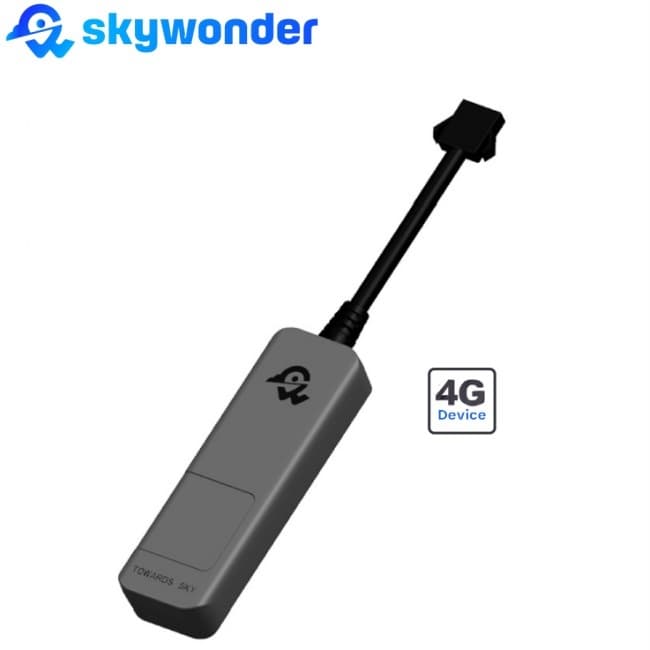
J11 Dual IP 4g Vehicle GPS Tracker
Professional J11 Dual IP 4g Vehicle GPS Tracker With Light Sensor from Skywonder GPS

GX7 4G Advance GPS Tracker
4G GX7 WIFI GPS Tracker from Skywonder GPS

C03 Car Charger GPS Tracker
Professional C03 Car Charger GPS Tracker from Skywonder GPS

Gt03 Vehicle GPS Tracker
Professional Gt03 Vehicle GPS Tracker from Skywonder GPS

J03 Vehicle GPS Tracker
Professional J03 Vehicle GPS Tracker from Skywonder GPS

J02 Vehicle GPS Tracker No Subscription
Professional J02 Vehicle GPS Tracker No Subscription from Skywonder GPS

GX3 Vehicle GPS Tracker
vehiclel GX3 4G Tracker from Skywonder GPS

Gt10 4G Vehicle GPS Tracker
Professional Gt10 Vehicle GPS Tracker from Skywonder GPS
Why Choose Vehicle GPS Trackers?
Key Features
Buyer guide
A vehicle GPS tracker is a hardwired wide-voltage (9-90V or 9-95V) device that reports position, ignition status, alarms and mileage from a car, truck, bus or motorcycle over a cellular network. SKYWONDER manufactures the range in Shenzhen factory-direct, with MOQ of 50-100 units per model, white-label branding from 100 units, and GT06 protocol output that runs on Traqcare or any third-party platform. This guide covers how to pick a model by buyer type, a spec comparison of the current SKUs, OEM and MOQ tiers, four industry deployments, and the sample-to-production path.
How to choose a vehicle GPS tracker
Choose by installation method first, then by the alarms and control outputs the commercial case actually needs. Most B2B buyers narrow to three shapes: hardwired relay-capable trackers for fleets and vehicle finance, plug-in OBD units for rental and retail resale, and battery or magnetic units for trailers and unpowered assets.
The second filter is network generation. Any order shipping into a market where 2G is already switching off has to be a 4G LTE model, and the band list on the datasheet has to match the target operator rather than a generic "global" claim.
The third filter is volume and branding. A 50-unit pilot and a 5,000-unit white-label programme point at different SKUs, because logo, packaging and firmware customisation only start to make sense at the tiers described in the reseller programme.
Fleet operators and logistics companies
Fleets need ignition status, not just dots on a map, because utilisation, idling and driver-hours reporting all key off ACC. Pick a hardwired model with an ACC input, a wide voltage range that survives 24V trucks, and an offline buffer so data is not lost in tunnels or rural dead zones.
The J03 and J11 both cache blind-spot data and resend it once the network returns, and the GT10 stores 2000 blind-spot points. If the fleet also wants video evidence, pair the tracker with a unit from the 4G dashcam and MDVR range rather than trying to make a tracker do camera work.
- Must-have: ACC detection, power-cut alarm, overspeed alarm, geofence, blind-spot data resend.
- Nice-to-have: driving behaviour scoring (J03), turn-point compensation for cleaner trajectories (GT10, J10, J11).
- Wiring: 9-90V or 9-95V input covers 12V light vehicles and 24V trucks on the same SKU, which keeps spares simple.
- See the deployment detail on the fleet management solution page.
Car rental and ride-hailing operators
Rental fleets care about recovery and mileage billing more than driver scoring. A relay output for remote fuel or power cut-off, plus a displacement alarm that fires when a vehicle moves while armed, covers most of the loss cases.
The J02 records mileage for rental billing and supports remote cut-off; the C03 car-charger tracker suits short-term or consumer-grade rental where no installer visit is possible. Both approaches are set out on the car rental page.
- Hidden install matters: the J10 and J11 are 83 x 23 x 13mm, small enough to conceal behind a dash panel.
- Tamper evidence: light-sensor and removal alarms flag a renter who opens the trim to pull the device.
- Multi-vehicle accounts: one login managing the whole fleet, with sub-accounts per branch.
Auto finance, leasing and buy-here-pay-here
Finance portfolios buy on two features: reliable remote immobilisation and a device that keeps reporting when someone cuts the harness. That means a relay output and a backup battery large enough to send the power-cut alarm before the unit dies.
The GX7 combines a 300mAh internal battery with tamper, fall-detection and low external battery alarms. The GT03 and GT06 both support remote cut-off with a 60mAh and 150mAh backup respectively. Portfolio-level workflow is covered on the auto finance and BHPH page.
- Immobilisation must be platform-triggered and SMS-triggered, so recovery teams are not blocked by a platform outage.
- Dual-server failover matters at portfolio scale: the J11 holds a primary and a backup server IP and switches automatically.
- Check local law on remote disable before quoting immobilisation as a feature in any market.
Motorcycle, three-wheeler and two-wheeler fleets
Two-wheelers are the hardest install: less space, more vibration, more water, and a 12V system that the tracker must not flatten overnight. Prioritise low sleep current, a compact housing and a sealed or potted build.
The J11 draws 25mA at 12V with a 10mA static current, and the J23 sleeps at 5mA with an IP65 housing. For bicycles and e-bikes, the SW16 is a self-powered 2400mAh tail-light form factor with IP67 sealing and WiFi-assisted positioning. Model notes are expanded on the motorcycle tracker page and in the guide to choosing a motorcycle GPS tracker.
Resellers and white-label brands
Resellers optimise for a narrow catalogue that covers most enquiries, consistent firmware behaviour across SKUs, and branding that does not raise the MOQ beyond what a first order can absorb. Two hardwired 4G models plus one OBD model usually covers 80 percent of inbound demand.
Because the range speaks a single tracker protocol, a reseller can put every SKU on one platform instance and avoid maintaining separate integrations. The commercial terms sit on the reseller programme page and in the white-label GPS tracker guide.
- Start with GT06 or GX3 as the volume hardwired unit, GX7 or J11 where alarms and failover matter, C30 for the plug-in tier.
- Ask for the APN and server IP to be pre-flashed so field installers never touch SMS configuration.
- Budget SIM data separately; see how much data a tracker consumes and the SIM card guide.
Wired vs OBD vs battery and magnetic: the install trade-off
Hardwired units are spliced into the ignition harness. They give ACC status and a relay output for engine cut-off, they never fall out, and they are the only sensible choice for finance, immobilisation and anything a driver might want to remove.
OBD units plug into the diagnostic port in under a minute and need no installer, which is why they dominate rental, insurance pilots and retail. The cost is visibility: anyone can unplug one, and the port is powered even with the ignition off, so sleep current management matters. The OBD tracker range covers the C28 and C30.
Battery and magnetic units carry their own power and attach with magnets, which suits trailers, containers and machinery with no supply to tap. They report on a schedule rather than continuously, so they are an asset tool rather than a fleet tool; see the asset tracker and portable tracker categories, and the comparison of wired versus wireless asset trackers.
- Wired: full feature set, ACC, relay cut-off, permanent power, needs a fitter and a workshop slot per vehicle.
- OBD: self-install, portable between vehicles, reads vehicle data, visible and removable.
- Battery or magnetic: no install at all, no ACC, no cut-off, reporting interval traded against battery life.
- Practical advice on placement is in where a GPS tracking device is installed on a car.
Why 4G now: the 2G and 3G sunset
Operators across Europe, Australia, India, Brazil and parts of Africa and the Gulf have either retired 2G and 3G or published a retirement date. A 2G tracker sold into one of those markets becomes scrap the day the carrier switches the band off, and the installed base has to be replaced at the reseller expense.
The practical rule: order 2G only for a market you have confirmed is still running GSM with no announced sunset, and only when the price gap genuinely decides the deal. Everything else should be 4G LTE with a band list checked against the destination operator.
In this range the J02, J03, J10, J23 and C28 are 2G-class radios, while the GT03, GT06, GT10, GX3, GX7, J11, C30 and SW16 are 4G LTE. The full band-by-band reasoning is in choosing between 4G, 3G and 2G and the 4G GPS tracker category.
Vehicle GPS tracker model comparison
The table below compares the hardwired vehicle trackers in the current SKYWONDER range using the values published on each product datasheet. Where a figure is not published for a model the cell reads ", " rather than an estimate.
Read the tracking sensitivity and satellite channel rows together: more channels and a lower dBm figure mean faster fixes under tree cover and in urban canyons, which is what buyers in Lagos, Sao Paulo and Delhi usually complain about first.
Plug-in and specialist models sit outside the table because their spec sheets are not comparable. The C28 and C30 are OBD units, the C03 is a car-charger tracker, and the SW16 is a self-powered two-wheeler unit.
Hardwired vehicle GPS tracker specifications as published on the SKYWONDER product datasheets. ", " means the figure is not published for that model.
| Specification | GT03 | GT06 | GT10 | GX3 | GX7 | J02 | J03 | J10 | J11 | J23 |
|---|---|---|---|---|---|---|---|---|---|---|
| Cellular chip | SIMCOM A7670SA | SIMCOM7076SA | QUECTELEC20 | , | , | , | RDA | RDA 8955L | , | MTK2503 |
| GPS chip model | Zhongke Wei AT6558R | AT6558R | AT6558R | , | AT6558R | , | AT6558R | AT6558R | , | , |
| Positioning mode | Beidou +GPS | GPS/BDS/GLONASS/AGPS | Beidou\GPS\LBS\AGPS | Beidou +GPS | BDS+GPS | GPS/BeiDou/LBS | GPS, Beidou | GPS / BDS / GLONASS / AGPS | GPS / BDS / GLONASS / AGPS | , |
| Satellite channels | , | 32 | 64 | 32 | 66 | 50 | 72 | 66 | 66 | 66 |
| Tracking sensitivity | -162 dBm | -162 dBm | -162 dBm | -162 dBm | -162 dBm | -147dBm | -162 dBm | -160dBm | -160dBm | -165dBm |
| Position accuracy | <10m(1σ) | <10m | <10m | , | <10m | 5-10m | <10 meters (base on Amap database) | <10m | <10m | 10 meters |
| Cold start time | Average 32 seconds | , | Average 32 seconds | Average 32 seconds | 32S(open sky) | <27s | , | Avg. hot start: 15s Avg. cold start: 32s | Avg. hot start: 15s Avg. cold start: 32s | <32 seconds |
| Communication protocol | , | TCP | TCP | , | , | Embedded TCP/IP stack | TCP/IP | TCP | TCP | , |
| Operating voltage | DC 9V - 95V | 9-90V | DC 9V - 95V | DC 9V - 95V | DC 9V - 90V | , | 9-90V | DC 9V - 90 V | DC 9V - 90 V | DC 9-95V |
| Backup battery | 60 mAh (3.7V polymer battery) optional | 150 mAh(3.7v polymerbattery) | 180 mAh (3.7V polymer battery) | 60 mAh (3.7V polymer battery) optional | 300mAh (3.7V Polymer battery ) | NI-MH AAA 3.6V/110mA, working for 2 hours | 150MA | , | 0.5 hours (3.7V/50mAH lithium battery | 60mAh |
| Dimensions | 79mm * 33mm * 16mm | 80.1*35*17.3mm | 99mm * 54mm * 16.5mm | 79mm * 33mm * 16mm | , | 82mm*23mm*13mm | 136.5*32.6*13.9mm | L83*W23*13mm | L83*W23*13mm | 77mm x 28mm x 15mm |
| Weight | 40 grams | 50.6 g | 75 g | 40 grams | , | 26g | 35 g | 26g | 26g | 26g |
GT06 4G GPS Tracker For Car No Monthly Fee
The default 4G hardwired unit for cars, vans and light trucks, and the usual first order for a new reseller.
150mAh backup, 2000 MB memory, displacement alarm with remote fuel and power cut-off
Gt10 4G Vehicle GPS Tracker
Trucks and buses where the installer wants a larger housing, external relay and microphone options.
64 satellite channels, 180mAh backup, 2000-point blind-spot buffer
Gt03 Vehicle GPS Tracker
Compact 4G tracker for high-volume car programmes that need remote immobilisation without extra ports.
SIMCOM A7670SA, 79 x 33 x 16mm, 40 grams, DC 9V - 95V
GX3 Vehicle GPS Tracker
Volume white-label SKU where the requirement list is tracking, geofence and the standard alarm set.
Micro SIM, power-outage and low-voltage alarms, 10mA dormant current
GX7 4G Advance GPS Tracker
Finance and leasing portfolios that need tamper detection and a battery that survives a cut harness.
300mAh internal battery, ACC input, relay control line, optional SOS and MIC
J11 Dual IP 4g Vehicle GPS Tracker
Operators running their own server who cannot afford a single point of failure.
Primary and backup server IP with automatic failover, 25mA at 12V, OTA upgrades
J10 Vehicle GPS Tracker With Light Sensor
Concealed installs where removal detection matters and the market still runs 2G.
Light sensor, IP lock support, GT06 product protocol, harsh-driving alarms
J03 Vehicle GPS Tracker
Fleets that want driving-behaviour scoring on a low-cost 2G platform.
IP65, 72 channels, braking and acceleration scoring, 1300-point offline buffer
J02 Vehicle GPS Tracker No Subscription
Rental and lease billing where mileage statistics and remote cut-off are the whole requirement.
26g, mileage statistics, illegal-movement alarm, LBS assist
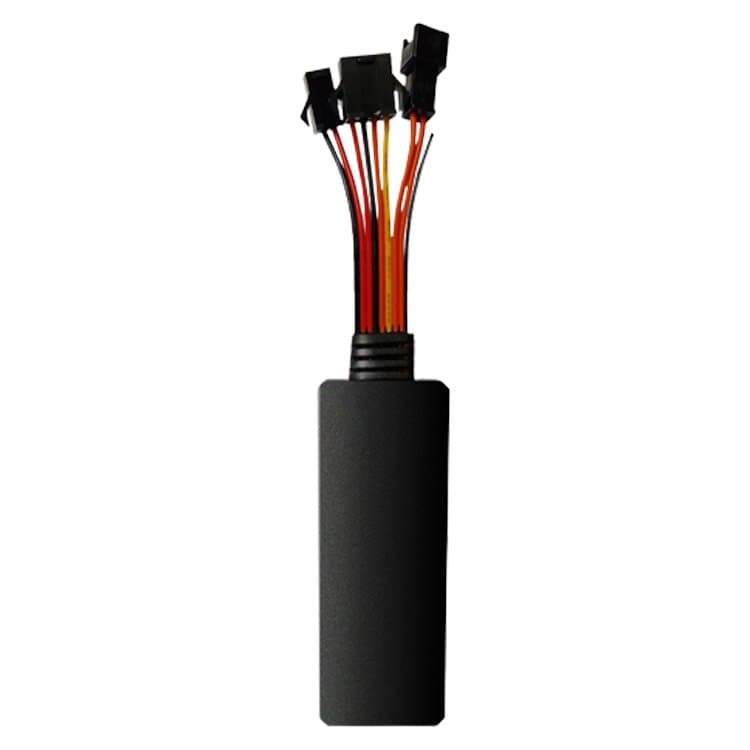
J23 Vehicle GPS Tracker Detector
Vehicles with door sensors and maintenance scheduling, such as cash-in-transit and service vans.
-165dBm tracking sensitivity, IP65, door-magnetic input, maintenance reminders

C30 4G OBD GPS Tracker
Self-install 4G tier for rental, insurance pilots and retail channels.
OBD plug-in, 180mAh optional battery, tamper and offline alarms

C28 2G OBD Tracker
Entry-price plug-in unit for 2G markets with no announced sunset.
47.9 x 28.2 x 28.9mm, GPS plus BeiDou plus WiFi and cell positioning, under 3mA sleep
C03 Car Charger GPS Tracker
Covert or no-install tracking in rental cars and owner-driver vehicles.
Dual USB charger form factor, 300mAh battery, removal and motion alarms

Sw16 Bikecyle Tracker
Bicycles, e-bikes and shared two-wheeler fleets with no wiring access.
IP67, 2400mAh, tail-light housing, GPS plus Beidou plus LBS plus WiFi positioning
Platform, protocol and software
Hardware is only half of a tracking deal. The buyer is really asking two questions: what does the device speak, and what will my customer log into.
SKYWONDER vehicle trackers output the GT06 protocol, which is the most widely parsed tracker protocol in the industry. Dashcams and MDVRs in the sibling range use JT/T 808 instead, so a mixed video and telematics fleet needs a platform that handles both.
Traqcare: the white-label platform
Traqcare is the in-house platform, available on web, iOS and Android, and it can be white-labelled with a reseller brand. It is the fastest route for a reseller who wants to sell a complete product rather than a box.
- Live tracking, history playback and trip reports.
- Alerts and geofences, including the power-cut, overspeed, vibration and displacement alarms the hardware raises.
- Fuel management and consumption reporting.
- Device management, user roles and sub-accounts for multi-branch operators.
- Integration and protocol references are on the developers page.
- Branding and pricing terms sit on the GPS tracking software page.
Third-party platforms and self-hosting
Buyers who already run a platform do not need to migrate. Because the devices speak a standard protocol, they are compatible with Traccar, Wialon, Navixy and GPS-Trace, and no port fees are charged for pointing a device at a third-party server.
The J11 goes one step further with dual server IPs, so a self-hosted operator can keep a failover endpoint configured on the device itself. Integration notes and protocol references are on the developers page and in the GT06 protocol explained.
- Compatible out of the box with Traccar, Wialon, Navixy and GPS-Trace.
- APN and server IP can be pre-configured at the factory so installers never send SMS commands.
- Platform selection for resellers is compared in the top white-label GPS tracking platforms for 2026 and build versus buy.
What "no monthly fee" actually means
Two SKUs in this range carry no-monthly-fee and no-subscription naming, and buyers reasonably ask what the catch is. SKYWONDER charges no recurring platform fee on those models; the device still needs a SIM with a data plan, which the buyer or the end user sources locally.
For a reseller this is a margin decision rather than a technical one. The background is set out in no monthly fee car GPS trackers.
See the platform
A 30-minute walkthrough of the Traqcare platform and white-label apps with your fleet or reseller use case.
OEM, ODM and white-label programmes
OEM here means SKYWONDER hardware carrying your brand: logo on the device, your housing colour, your retail box, your manual, your serial prefix and your APN pre-loaded. ODM means a device designed from scratch to your specification, with its own PCB, enclosure and firmware.
Most resellers start with OEM on a proven SKU and only move to ODM once annual volume justifies tooling. The commercial detail is expanded in the OEM GPS tracker guide and on the manufacturer page.
- Confirm the MOQ per model, not per order. MOQ is 50-100 units depending on the product.
- Confirm which 4G bands the destination operator actually uses before approving artwork.
- Decide who supplies the SIM and whether the APN is flashed at the factory.
- Specify the server IP and port that ship pre-configured, plus a fallback if you use dual IP.
- Agree the logo method: silk screen, laser engraving or moulded into the housing.
- Agree housing and button colours, and whether you need retail-ready packaging or bulk cartons.
- Ask for the manual and quick-start guide in the languages your market needs.
- Fix the serial number prefix so your RMA process can identify your own stock.
- Confirm which certifications ship with the batch: CE, FCC, PTCRB, IC, RoHS, REACH and ISO 9001 apply across the range; see certifications.
- Ask for help with market-specific approvals early, for example the process described in ANATEL certification for Brazil and AIS-140 compliance in India.
- Agree the firmware version that ships, and who signs off OTA updates afterwards.
- Agree the warranty and RMA route: 12 months on manufacturing defects, with returns within 30 days for unopened goods, buyer-paid return shipping and a possible restocking fee. Custom and white-label builds are non-returnable.
- Plan the freight route and documents before the deposit; see importing GPS trackers from China.
When ODM is the right call
ODM is a different commitment: custom PCB layout, a unique enclosure, tailored firmware and an exclusive product for your brand. MOQ runs 1,000-5,000 units depending on complexity, and the timeline is 60-90 days for prototyping plus production.
It is worth it when you have a repeatable annual volume and a feature no stock model covers. It is not worth it to avoid a logo fee. Volume thresholds are discussed in the GPS tracker MOQ guide.
Customisation tiers, minimum quantities and lead times. No pricing is published; request a quotation.
| Tier | What changes | Minimum quantity | Lead time |
|---|---|---|---|
| Standard | Stock firmware, stock housing, neutral packaging. Best for pilots and first orders. | 50-100 units depending on the product | In-stock models ship in 3-7 days |
| Logo and packaging (OEM) | Logo on device by silk screen, laser or moulding; housing and button colour; retail box; manual and quick-start guide; custom serial prefix. | From 100 units | 15-25 days after deposit |
| Firmware and app customisation | Pre-configured APN and server IP, protocol and feature adjustments, white-label Traqcare web and mobile apps under your brand. | From 100 units on existing hardware | 15-25 days after deposit |
Get a volume quote
Tell us the models, quantity and destination country. Quotes usually come back within one business day.
Four ways buyers deploy vehicle trackers
Commercial fleets and logistics
A logistics operator fits hardwired trackers across trucks and vans to measure utilisation, cut idling and evidence delivery times. ACC status gives engine-hours, the geofence gives arrival and departure timestamps, and the blind-spot buffer keeps the trip record intact through dead zones.
The GT10 suits 24V trucks and the J03 adds harsh-braking and acceleration scoring for driver programmes. Cold-chain and school-bus operators layer sensors and compliance reporting on top; see logistics and cold chain and school bus and AIS-140.
Car rental, leasing and ride-hailing
Rental operators use trackers for three jobs: finding an overdue vehicle, billing mileage accurately and proving where a vehicle was during a damage dispute. The J02 covers mileage statistics and remote cut-off; the C30 gives a branch the option of self-installing a unit in minutes.
Multi-vehicle account structures matter here because a rental group usually runs branch-level teams under one corporate login. The workflow is described on the car rental page.
Vehicle finance, leasing and BHPH
Finance portfolios protect collateral. The tracker needs a relay output for remote immobilisation, a backup battery that reports a cut harness, and a tamper alarm that fires when the device is pulled.
The GX7 covers tamper, fall detection and low external battery in one unit, and the J11 adds server failover so a platform outage does not blind a whole book. Legal constraints on remote disable vary by country, so confirm them per market before quoting; the commercial shape is on the auto finance and BHPH page.
Motorcycle, three-wheeler and last-mile delivery
Two-wheeler delivery fleets in India, Nigeria, Kenya and Mexico are the fastest-growing segment for this category, and the constraints are vibration, water and battery drain. A tracker that wakes the bike battery overnight will be blamed for every no-start.
The J11 at 25mA operating and 10mA static is the usual answer for petrol two-wheelers; the SW16 with its own 2400mAh cell and IP67 housing covers bicycles and e-bikes. Regional band and network notes are in the best 4G GPS tracker for Africa in 2026 and on the motorcycle tracker page.
How to order samples and move to production
The path from enquiry to delivered stock is short if the specification is settled early. Most delays come from band lists and server details being confirmed after the sample, not before it.
- 1
Send the requirement list
Tell us the vehicle type, target country, expected first-order quantity, whether you need engine cut-off, and which platform the devices will report to. Use the contact page or the quote form on this page.
- 2
Get a quotation and a band check
We return a quotation with model recommendations, customisation options, packaging and shipping choices. At this stage we confirm the LTE bands against the operators in your market so the sample is representative.
- 3
Order 3-10 samples
Sample orders are 3-10 units and ship within 5-7 business days by express courier. Order more than one model if you are still deciding between a wired and a plug-in tier.
- 4
Field-test on your own platform
Point the samples at your server or at a Traqcare trial account, drive them for a week, and check cold-start time, reconnection after a dead zone, ACC accuracy and cut-off behaviour. Our engineers help with protocol parsing during this window.
- 5
Sign off customisation
Confirm logo artwork, housing colour, packaging, manual languages, serial prefix, firmware version, APN and server IP. Nothing enters production until the artwork and firmware are approved in writing.
- 6
Place the production order
Production starts after the deposit and design approval. In-stock models ship in 3-7 days; custom and high-volume runs take 15-25 days after the deposit, depending on quantity and the level of customisation.
- 7
QC, documents and shipping
Every batch gets a final QC inspection and a pre-shipment report, and you may arrange a third-party inspection as well. Goods ship FOB Shenzhen or CIF to your port with commercial invoice, packing list, HS codes and certification documents included.
Test before you commit
Order 3–10 sample units and evaluate them on your own platform or on Traqcare before placing a production order.
Production and quality control
SKYWONDER Technology has manufactured in Shenzhen since 2011, more than a decade of continuous production in this category. The plant runs to 5,000+ square metres with 200+ staff including 30+ R&D engineers, an more than 20 million units dispatched to date, and customers in over 100 countries.
The R&D team writes the firmware and protocol stacks rather than buying reference designs, which is why protocol changes and market-specific firmware are possible without a new hardware programme. Quality management is certified to ISO 9001.
In-house R&D
- Custom firmware development on existing hardware platforms.
- Protocol integration covering GT06, Teltonika and JT808.
- AI algorithm training for the ADAS and DMS camera range.
- Hardware modification and adaptation for specific markets.
- Support with the testing and certification process.
SMT production line
Boards are assembled on automated surface-mount lines with a 99.7 percent first-pass yield. Inspection is layered rather than end-of-line only, so a solder defect is caught before the unit is cased.
- High-speed SMT pick-and-place machines.
- Reflow ovens with a nitrogen atmosphere.
- AOI, automated optical inspection, on every board.
- X-ray inspection for BGA components.
Assembly and functional testing
- Housing assembly and cable routing.
- Firmware flashing and configuration, including your APN and server IP.
- GPS signal testing covering cold start and hot start.
- Cellular connectivity verification on the target bands.
- Waterproof testing on IP65 and IP67 models.
- Drop testing and vibration testing.
- Final QC inspection and packaging.
Pre-shipment and after-sales
Every batch passes in-line SMT testing, aging tests and a pre-shipment QC report before it leaves the building. Buyers are welcome to send their own inspector or a third-party agency.
All devices carry a 12-month manufacturer warranty against manufacturing defects, with firmware updates, integration support and spare parts available afterwards. Returns are accepted within 30 days on unopened goods; the buyer pays return shipping, a restocking fee may apply, and custom or white-label builds are non-returnable.
Partners are welcome to visit the Shenzhen facility with about a week of notice to see the SMT line, the assembly and testing workshops, the R&D lab and the sample room. Common sourcing questions are collected on the FAQ page and the wider range is indexed under solutions.
Buying questions
What is the minimum order quantity for vehicle GPS trackers?
MOQ is 50-100 units per model depending on the product. Before committing to volume you can validate the hardware on your own platform with a sample order of 3-10 units, which ships within 5-7 business days. White-label branding starts at 100 units.
Which models support remote engine cut-off?
The hardwired models with a relay output support remote fuel or power cut-off from the platform or by SMS, including the GT03, GT06, GT10, GX7, J02, J03, J10 and J11. The GX7 exposes it as a dedicated relay control line alongside its ACC detection input. Check local law on remote immobilisation before offering it as a feature in any market.
Do your vehicle trackers work with Wialon, Traccar or my own server?
Yes. The vehicle trackers output the GT06 protocol and are compatible with Traccar, Wialon, Navixy and GPS-Trace with no port fees, or you can point them at your own endpoint. The J11 also holds a backup server IP and fails over automatically. Integration notes are on the developers page.
Should I still buy 2G trackers?
Only for a market you have confirmed is still running GSM with no announced sunset. Operators across Europe, Australia, India and parts of Latin America and Africa have retired or scheduled the retirement of 2G and 3G, and a tracker on a retired band cannot be rescued by firmware. The J02, J03, J10, J23 and C28 are the 2G-class models in this range; the GT03, GT06, GT10, GX3, GX7, J11, C30 and SW16 are 4G LTE.
What does "no monthly fee" mean on the GT06 and J02?
It means SKYWONDER charges no recurring platform subscription for those models. The device still needs a SIM card with a data plan, sourced by you or your end customer locally. See no monthly fee car GPS trackers for the commercial detail.
Can I order samples before a bulk order, and how fast do they ship?
Yes. Sample orders are 3-10 units and ship within 5-7 business days by express courier. Order a wired and a plug-in model together if you are still deciding which tier fits your market.
What are the production lead times?
In-stock models ship in 3-7 days. Custom or high-volume production runs 15-25 days after the deposit is received, depending on quantity and the level of OEM or ODM customisation. Full ODM programmes with a new PCB and enclosure need 60-90 days for prototyping plus production.
Which certifications do the vehicle trackers carry?
Devices across the range are manufactured to CE, FCC, PTCRB, IC, RoHS, REACH and ISO 9001 standards. Region-specific approvals and test reports can be prepared on request for your import market; see certifications and importing GPS trackers from China.
Get a volume quote
Tell us the models, quantity and destination country. Quotes usually come back within one business day.
Guide updated 2026-09-17
Frequently Asked Questions
Do vehicle GPS trackers require monthly fees?
Some models offer no monthly fee options with lifetime tracking, while others require a subscription for cellular data and platform access.
How accurate are vehicle GPS trackers?
Our trackers provide accuracy within 5-10 meters under normal conditions using GPS, GLONASS, and cellular triangulation.
Can I install a GPS tracker myself?
Yes, most of our vehicle trackers are designed for easy DIY installation. OBD models plug directly into your vehicle's diagnostic port.
Need Help Choosing the Right Product?
Our technical team is ready to help you select the perfect GPS tracking solution for your specific requirements.