
What does a GPS fleet tracking system include?
Three layers, bought separately but specified together: location hardware, video hardware, and the software that receives both. Matching them is what first deployments underestimate, a camera that cannot reach your server is a costly local recorder.
Skywonder has built this hardware in Shenzhen since 2011 and ships to 100+ countries from an ISO 9001 factory of 5,000+ m2 with 200+ staff, 30+ of them R&D engineers. Capacity is 20M+ units dispatched to date across vehicle trackers, OBD trackers, asset trackers and 4G dashcams and MDVRs.
Layer 1: the tracking device
A wired tracker draws power from the battery, detects ignition through an ACC line, and reports position, speed and alarms over 4G. That ignition line separates a fleet report from a dot on a map: without it, the platform cannot tell idling from parked.
Trackers use GT06, a compact binary protocol: a position packet is roughly 30 bytes on the wire versus 200+ bytes for an equivalent NMEA-over-TCP message. The GT06 reference covers message types for teams integrating directly.
Layer 2: the video device
A fleet dash cam supplies what a GPS trail cannot: who was driving and whether the claim against you is accurate. Cameras run JT/T 808 and add ADAS on the road-facing lens, DMS on the driver-facing lens and BSD on the sides. They are not a per-vehicle default; fit them where claim exposure is largest.
Layer 3: the platform
Traqcare covers live tracking, route playback, alerts, geofences, fuel management, reports, device management and user roles, as a web app with iOS and Android apps.
Hardware is not locked to it: devices are compatible with third-party platforms such as Traccar, Wialon, Navixy and GPS-Trace. See developer resources for the integration path.
Benefits of GPS fleet tracking
The benefits worth quantifying are the ones with a mechanism behind them. Each is stated with the device signal that produces it, so you can check the hardware you are quoting actually reports it.
Fuel
- ACC on with zero speed for a sustained period is an idling event. The J10 uploads ACC on/off status with every report, which is what makes idling reporting possible.
- Route playback exposes the gap between assigned and driven routes.
- Fuel management compares tank movement against distance. The WD10 takes an oil-level sensor as an expansion input for measured rather than inferred consumption.
Utilisation
- Engine hours and daily distance separate the trucks that earn from the ones parked on a yard, the input for a fleet-size decision.
- Trip and stop reports expose dwell time at each site, the hidden cost in a delivery round.
- Geofences around depots and customer sites turn arrivals into timestamps instead of phone calls.
Safety
- Overspeed, harsh acceleration, harsh braking, sharp cornering and collision alarms come from device firmware, not later inference; the J10 lists all five.
- ADAS warns the driver in the cab: the D9 supports FCWS, LDWS, PCWS, HMW and FVSA.
- DMS detects smoking, yawning, closed eyes, distraction and camera occlusion, with an audible cab alert and a platform event.
- BSD covers left and right blind areas on lane changes, where urban fleets collect scrape damage.
Theft and tamper
- Power-cut alarms fire the moment supply is interrupted: the GX3 on illegal power cut, the J10 when vehicle voltage drops below 5 V on backup battery.
- Displacement and vibration alarms catch towing outside working hours; the GT06 4G reports both.
- Blind-area buffering matters: the J10 buffers positions while out of coverage and resends on reconnect.
Compliance
Requirements for device type, certification and record retention vary by market, so check local regulations for the country you are deploying in before you specify hardware. We can assist with the additional certifications a specific market asks for.
Certifications across the range are CE, FCC, PTCRB, IC, RoHS, REACH and ISO 9001. Region-specific certifications and test reports for your import market can be provided on request; see the product page for a specific model and our certifications page.
Wired tracker, OBD plug-in, 4G dashcam or MDVR?
Pick by install effort, tamper exposure and whether you need video. A mixed fleet usually ends up with two or three.
- Owned vehicle staying years in the fleet: wire it. Install cost is paid once, tamper exposure lower.
- Fast turnover, rental, short hire, a pilot: an OBD plug-in avoids install labour on each swap. See car rental.
- If one claim costs more than fitting cameras across that vehicle class, fit the class.
- Recovery risk on financed or lease-to-own vehicles: wire a concealed tracker with a power-cut alarm and plan for repossession workflows, see auto finance and BHPH tracking.
Fleet hardware types compared
| Criteria | Wired 4G tracker | OBD plug-in | 4G dashcam | Multi-channel AI MDVR |
|---|---|---|---|---|
| Install | Technician; battery, ground, ACC, hidden | Plug into the OBD-II port, no tools | Windscreen mount plus wired power | Technician; recorder, 4-8 cameras, cabling |
| Best for | Owned trucks, vans, buses, taxis | Short rentals, pilots, fast turnover | Where front and cabin view settles disputes | Buses, tankers, tippers, urban distribution |
| Tamper resistance | High: concealed, power-cut alarm, backup battery | Low: visible and unplugged in seconds | Medium: camera visible, mount fixed | High: recorder out of reach, cameras fixed |
| Video channels | None | None | 1 to 4 by model | 4, 5 or 8, plus 360-degree surround |
| AI functions | None; G-sensor behaviour alarms only | None; vibration and overspeed only | ADAS and DMS on AI models | ADAS, DMS, BSD, passenger counting |
| Monthly data | Lowest: compact GT06 packets | Lowest: same order as wired | Moderate: events, snapshots, occasional live view | Highest: multi-channel live view, playback |
Recommended devices for fleet deployments
These eight models span the wired tracker, OBD, dashcam and MDVR tiers. Samples of 3-10 units let you validate a model before committing to volume; see the product page for the full specification of each.
On the MDVR tier, channel count and AI functions are what separate the models: the WD10 covers four-channel truck and bus work, and the W108 adds 360-degree surround view for large vehicles in tight space. Bus fleets and any deployment needing passenger counting or AIS-140 device rules should start from school bus and AIS-140 tracking.

GT06 4G GPS Tracker For Car No Monthly Fee
Default wired 4G tracker for cars, vans and light trucks.
Under 10 m accuracy, GPS/BDS/GLONASS/AGPS, geofence, overspeed, vibration and displacement alarms

J10 Vehicle GPS Tracker With Light Sensor
Cost-controlled wired tracker for markets still on GSM/GPRS.
ACC status, power-down and harsh-driving alarms, offline position buffering

GX3 Vehicle GPS Tracker
Compact 4G tracker with built-in antenna for tight installs.
BeiDou + GPS, power-outage, low-voltage and geofence alarms, OTA upgrade

C30 4G OBD GPS Tracker
Plug-in 4G tracker for rental, trial and fast-turnover vehicles.
5-10 m accuracy, GPS + BDS, vibration and overspeed alarms, single-account multi-vehicle
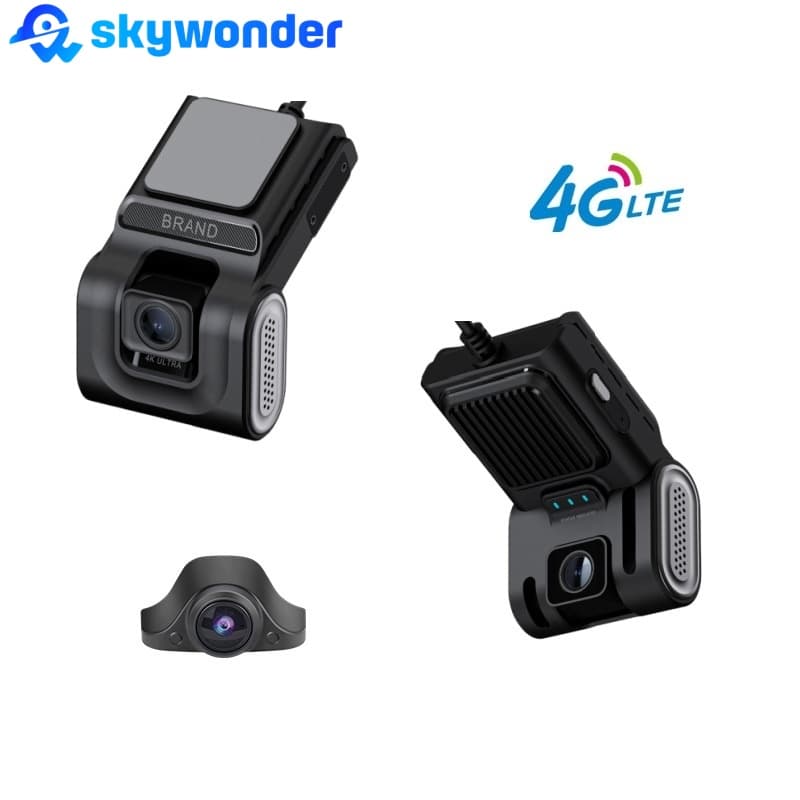
D9 4G Multi Channel AI Dashcam
Multi-channel AI dashcam for light commercial vehicles needing ADAS and DMS.
FCWS, LDWS, PCWS, HMW, FVSA; 6-axis G-sensor; 2.4G/5.8G Wi-Fi hotspot

Wd02 AI Dashcam
Four-lens AI dashcam for taxis, vans and ride-hail fleets.
Main camera 1920x1080, three sub-cameras 1280x720, two microSD slots

Wd10 4 Channel AI MDVR With ADAS DMS
Four-channel AI MDVR for trucks and buses needing long retention.
ADAS, DMS, BSD; 256 GB SD plus 2 TB SSD or disk
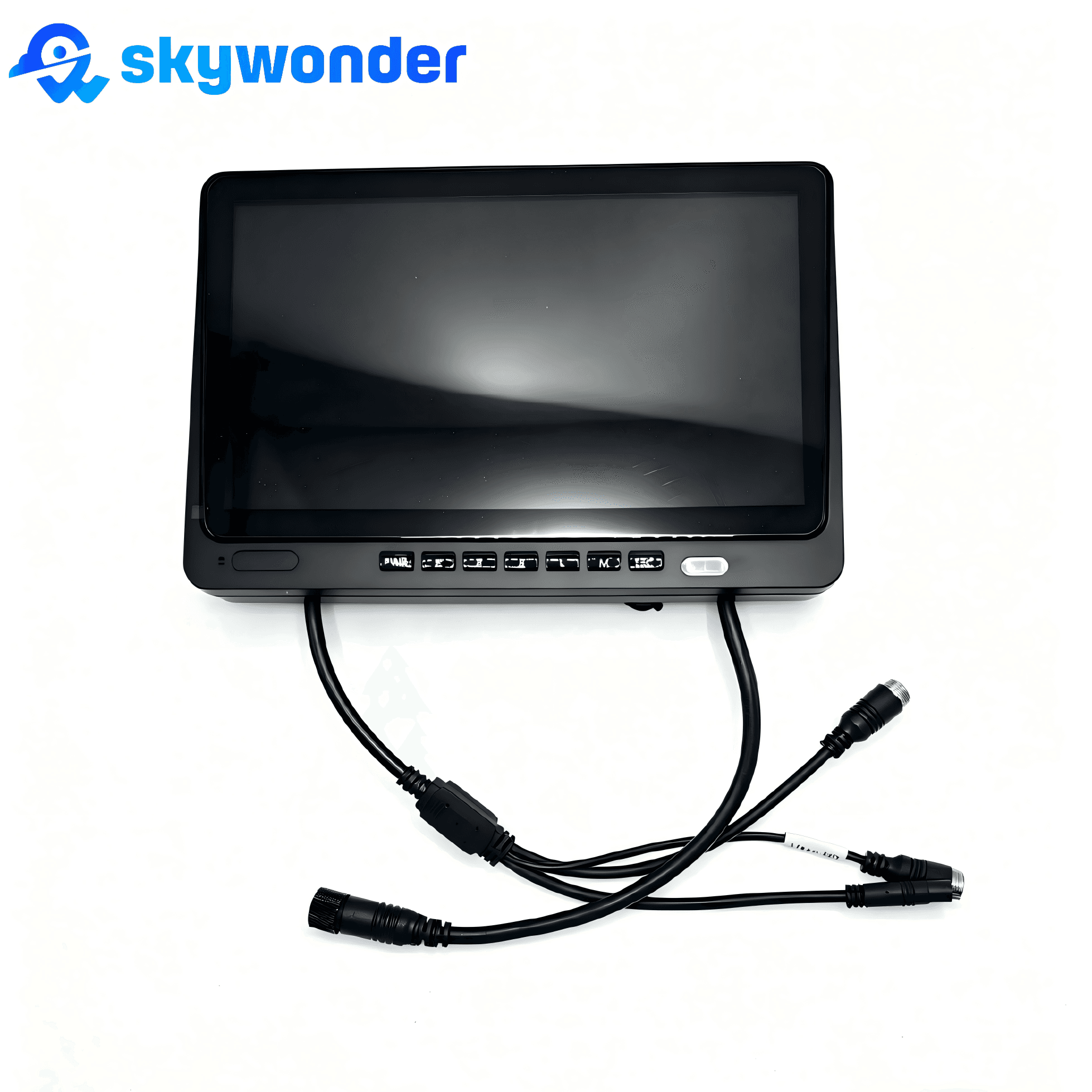
W108 4G 360° MDVR
Surround-view MDVR for large vehicles in tight urban space.
360-degree bird view, ADAS, DSM, BSD, face-recognition start authorisation, 10.1-inch touchscreen
Test before you commit
Order 3–10 sample units and evaluate them on your own platform or on Traqcare before placing a production order.
The platform: live tracking, reports and white-labelling
For a fleet running its own vehicles the platform is an operations tool and branding is cosmetic. For a reseller it is the product, which is why white-label controls matter. Traqcare documentation is at docs.traqcare.com.
What white-label covers
- Your brand name, logo, app name and domain across web and both mobile apps.
- Your own user hierarchy and user roles across the platform, for sub-dealers and end customers.
- Device management under your own account, for onboarding and administering batches of devices.
- Detail: white-label platform and the reseller programme.
Running hardware on your own platform
Resellers with an existing stack need not move. Trackers speak GT06 and dashcams and MDVRs speak JT/T 808, so devices are compatible with third-party platforms such as Traccar, Wialon, Navixy and GPS-Trace as well as Traqcare, see the developer hub. The GT06 protocol guide covers the message-level detail.
Weighing the two routes: see the build-versus-buy comparison and the platform round-up.
Reports worth configuring on day one
- Daily distance and engine hours per vehicle.
- Idling report with a threshold set to your tolerance, not a default.
- Geofence entry and exit for depots and key customer sites.
- Weekly driver behaviour summary, ranked, ranking changes behaviour faster than a score.
See the platform
A 30-minute walkthrough of the Traqcare platform and white-label apps with your fleet or reseller use case.
How to roll out fleet tracking without stalling
Deployments stall when 200 devices go in before anyone agrees what an alert means. Run it in this order.
- 1
Pilot on 5-10 vehicles
Order samples of 3-10 units and fit them across the vehicle types you actually operate, not the easiest ones. Run two to four weeks, checking position quality, alert accuracy and coverage gaps, and decide here whether cameras are needed.
- 2
Write the install SOP
Document wiring points, concealment, ACC connection and camera aiming per vehicle model, and photograph a finished install as the reference. That is what keeps device 150 as reliable as device 5 under a different technician.
- 3
Brief drivers before the devices go in
Explain what is recorded, who can view footage and what DMS alerts are for. Fleets that skip this spend the first month arguing about lens tape.
- 4
Tune alerts for two weeks
Start with overspeed, power cut, geofence and collision only, then adjust thresholds until alert volume is something a supervisor reads rather than mutes. Alert fatigue kills more projects than hardware faults.
- 5
Scale in batches and keep spares
In-stock models ship in 3-7 days and custom runs 15-25 days after deposit, so order the next batch while the current one is being fitted. Keep two to three percent of fleet count as shelf spares.
Data, SIM and storage planning
Trackers use very little data; cameras can use a lot, and the difference is how much video leaves the vehicle. Size the SIM plan before ordering.
Worked example: tracker data per vehicle
Let N be the reporting interval in seconds and B the bytes per report including overhead. Daily usage is (86400 / N) x B.
A GT06 position packet is roughly 30 bytes on the wire; allowing for retries and acknowledgements, B near 120 bytes is a workable planning figure. At N = 30: 2,880 reports x 120 bytes, about 346 KB per vehicle per day, roughly 10 MB a month.
Halving the interval to N = 15 doubles it to about 20 MB.
Worked example: camera data per vehicle
Let R be the live-stream bitrate in kbps and M the daily minutes of live viewing. Daily usage is R x 60 x M / 8 / 1000 MB.
At R = 512 and M = 20: about 77 MB a day, roughly 2.3 GB a month per vehicle, before snapshots and playback downloads. Halve the viewing minutes and you halve consumption, so live view should be an exception workflow.
The data usage calculator runs these numbers for your channel count, and the storage calculator sizes the card or disk for your retention target.
What drives camera data up
- Channels streamed at once: four-channel live view costs four times single-channel.
- Bitrate and resolution per channel. H.265, supported on the W108, makes smaller files than H.264 at the same quality.
- Event volume: every ADAS or DMS event uploading a snapshot is data, so tuning sensitivity tunes consumption.
- Remote playback over 4G is the largest line item when used casually; prefer depot Wi-Fi.
Storage on the device
Loop recording overwrites the oldest files, so retention depends on card size, channel count and bitrate, not a fixed number of days. The WD02 takes two microSD cards up to 128 GB each; the WD10 adds a 2 TB SSD or disk.
Buying as a reseller versus buying for your own fleet
Both buy the same hardware from the same factory, but the order shape differs: a fleet buys one or two models in a known quantity, a reseller buys a range, a brand and a platform.
- Pricing is quoted per model and volume. Send the model list and quantity through the lead form; shipping options and payment terms are confirmed with the quotation.
- Returns: 30 days on unopened standard products, buyer pays return shipping, restocking fee may apply; custom and white-label goods are non-returnable.
- Warranty is 12 months on hardware, covering manufacturing defects.
- Background: how we manufacture, MOQ and importing from China.
Order shape: own fleet versus reseller
| Aspect | Own fleet | Reseller |
|---|---|---|
| Model mix | One or two models matched to your vehicle types | A range across tracker, OBD and video tiers |
| MOQ | 50-100 units depending on model | White-label programme starts at 100 units |
| Branding | Standard Skywonder packaging is normally fine | Your logo, packaging, manuals, APN preset |
| Platform | Traqcare under your own account | White-label Traqcare, or a third-party server |
| Lead time | In-stock models 3-7 days | Custom runs 15-25 days after deposit |
| Support path | Direct to Skywonder engineering | Firmware updates, technical integration support and spare parts from us |
Get a volume quote
Tell us the models, quantity and destination country. Quotes usually come back within one business day.
Frequently asked questions
What is a GPS fleet tracking system?+
It is a tracking device in each vehicle, an optional 4G camera where video evidence matters, and a platform that receives both. The device reports position, speed, ignition state and alarms over 4G; the platform turns that into live maps, route playback, geofences, reports and alerts for supervisors.
Do I need a dash cam as well as a GPS tracker?+
Only where video would change an outcome. A tracker answers where a vehicle was and how it was driven; a 4G dashcam answers what happened and who was at the wheel. Most fleets fit cameras where claim exposure or supervision gaps are largest, and run tracker-only elsewhere.
Can I use Skywonder hardware with my own tracking platform?+
Yes. Trackers report over GT06 and the 4G dashcams and MDVRs over JT/T 808, so Traccar, Wialon, Navixy and GPS-Trace all take the hardware without a translation layer. Select GT06 (or the matching device model) in the platform, register the device by IMEI, and write your host and port into the device; validate against traffic from the exact SKU and firmware first. Integration notes are on the developers page.
How much mobile data does a fleet tracker use per month?+
A GT06 position packet is around 30 bytes on the wire, so with retry and acknowledgement overhead a tracker reporting every 30 seconds uses roughly 10 MB a month. Cameras are the variable cost: live viewing at 512 kbps for 20 minutes daily is about 2.3 GB a month. Our data calculator models your pattern.
Which tracker suits a mixed fleet of trucks and motorcycles?+
Wire the trucks with a full-size 4G tracker such as the GT06 4G, and use a compact unit with a built-in antenna such as the GX3 where space is tight. Two-wheel deployments have their own install and power constraints, covered on the motorcycle tracking page.
What certifications and warranty come with the devices?+
Certifications held across the range are CE, FCC, PTCRB, IC, RoHS, REACH and ISO 9001. Region-specific certifications and test reports for your import market can be provided on request, and the product page lists the full specification for a given model. Hardware carries a 12-month warranty covering manufacturing defects. See certifications and support.
Get a volume quote
Tell us the models, quantity and destination country. Quotes usually come back within one business day.