
What do schools and transport operators actually need?
School transport buyers ask for five things, in roughly this order: a parent app, a working panic button, speed enforcement, driver behaviour evidence, student attendance.
That order decides the hardware. A parent app and speed alerts need only a tracker; attendance and driver behaviour need a camera or a card reader. The wrong tier costs a retrofit.
Parent visibility
Parents want to know the bus has left, where it is now, and when it reaches their stop. That is a live map plus geofence entry and exit alerts on each pick-up point, delivered under the school or operator brand.
Schools want the same data aggregated: every route on one screen and late departures flagged.
Panic button and speed
AIS-140 as published describes the emergency button as a hard-wired physical control rather than a software button in an app; check local regulations for the state requirement. On Skywonder trackers that is either a built-in SOS key, as on the GT10, which triggers on a three-second press, or the optional SOS alarm input line listed on the GX7.
Speed is simpler: the overspeed threshold is configurable from the platform or by SMS, and the alarm reports as the bus crosses it.
Driver behaviour and attendance
Driver behaviour needs a driver monitoring system. The D9 detects smoking, yawning, closed eyes, distraction and camera occlusion, and its ADAS side covers forward collision, lane departure, pedestrian and headway warnings.
Attendance needs a card reader. The WD10 and WD11 list card-reader expansion, and the D12 lists RS232 ports for RFID readers; plain trackers list no card-reader input.
What AIS-140 means for a school bus fleet
AIS-140 is an Automotive Industry Standard published by ARAI for the Ministry of Road Transport and Highways. It reaches public service vehicles through the Central Motor Vehicles Rules, which is why tenders ask for a Vehicle Location Tracking device plus one or more emergency buttons; check local regulations for the position that applies to your project.
School buses are not automatically in scope nationwide. They fall under the mandate where a state notification extends it, so check local regulations for the state you register in before fixing the specification.
The requirement detail, including SIM, backend, enclosure and firmware expectations and the full approval path, sits on the AIS-140 GPS tracker compliance guide.
- Scope: a state notification decides whether school buses are covered at all, so the state, not the standard, sets your specification.
- Device: a Vehicle Location Tracking Device with NavIC-capable positioning, a hard-wired emergency button and a live link to the state backend.
- Approval: central type approval and per-state empanelment are two separate gates, and a project needs both.
Certified device versus certified project
A device can hold valid central type approval and still be rejected at an RTO because it is not empanelled with that state VLTD backend. Certification and empanelment are separate gates and a project needs both.
Skywonder publishes no AIS-140, ARAI or ICAT certification against any SKU, so treat approval and empanelment as project scope and check local regulations with the state RTO. The full AIS-140 breakdown also covers the parallel WPC, BIS and TEC approvals a rebranded device triggers.
NavIC is a chipset decision
The most common type-approval failure is NavIC implemented in firmware rather than in the positioning chipset. It passes a bench demonstration and then fails a real certification test.
The published GT10 and GX7 specifications list BeiDou and GPS positioning, with no NavIC constellation stated; see the product page for the full specification. Confirm the constellation requirement against your purchase order before ordering.
Hardware tiers for school buses
Two configurations cover almost every school transport project. Tier one is a tracker alone: parent visibility, speed enforcement, emergency button. Tier two adds a camera or MDVR for driver behaviour, video evidence and RFID attendance.
Tier two is the same multi-channel MDVR work a commercial operator specifies, so the wiring, storage sizing and ADAS tuning carry over from our fleet management solution.
Worked example: how much recording a bus generates
Storage on an MDVR is arithmetic. Let C be recorded channels, B the bitrate per channel in Mbps, H the hours per school day and D the retention days. Daily storage in GB is C x B x 3600 x H / 8192, and total retention is that times D.
Four cameras at 2 Mbps, eight hours a day, ten days retention: 4 x 2 x 3600 x 8 / 8192 is about 28 GB per day, so 281 GB total. That sits inside the WD10 envelope of one 256 GB SD card plus a 2 TB disk.
Run your figures in the storage calculator and size the SIM plan with the data usage calculator: uploaded video, not recorded video, consumes the bundle.
Tracker alone versus tracker plus dashcam or MDVR
| Capability | Tracker only | Tracker plus AI dashcam or MDVR |
|---|---|---|
| Hard-wired panic button | Built-in SOS key (GT10) or optional SOS input line (GX7) | Same tracker, plus alarm input on S202 and one-touch SOS on D12 |
| Overspeed and harsh-driving alerts | Overspeed threshold, vibration and power-cut alarms | Same, plus ADAS collision and lane-departure warnings |
| Driver monitoring (fatigue, phone, smoking) | No | DMS on D9, S202, WD10 and D12 |
| In-cabin and road video | No | 1 channel (S202), multi-channel (D9), 4 or 8 channel (WD10), 5 channel (D12) |
| RFID student attendance | No | Card reader expansion on WD10 and WD11; RS232 RFID ports on D12 |
| Dual-server reporting | Primary and backup failover on J11 | Multi-IP reporting up to 8 streams on D12 |
Recommended devices for school transport
These six models cover the tender specifications we see most often in India, Africa and Latin America. Every figure below comes from the published datasheet for that SKU.
Treat certification per model: devices are manufactured to CE, FCC, PTCRB, IC, RoHS and REACH standards and the factory runs an ISO 9001 quality system; the certifications page explains how to request the certificate for a named SKU and market.
When to step up to five channels
Where a tender asks for door, aisle, front, rear and driver views on one recorder, the D12 records five 1080p channels and exposes dual RS232 ports for passenger counters and RFID readers.
It also reports to multiple IP streams at once and carries a one-touch SOS, which maps onto a dual-backend requirement. Confirm the packet format with the state backend first.

Gt10 4G Vehicle GPS Tracker
Baseline school bus tracker with a built-in SOS key, geofencing and overspeed alarm.
Three-second SOS press raises a server alarm; positioning accuracy under 10 m in the open

GX7 4G Advance GPS Tracker
Tracker for buses where the panic button must sit in the passenger cabin.
Optional SOS alarm input line, ACC detection, tamper alarm and power-cut alarm
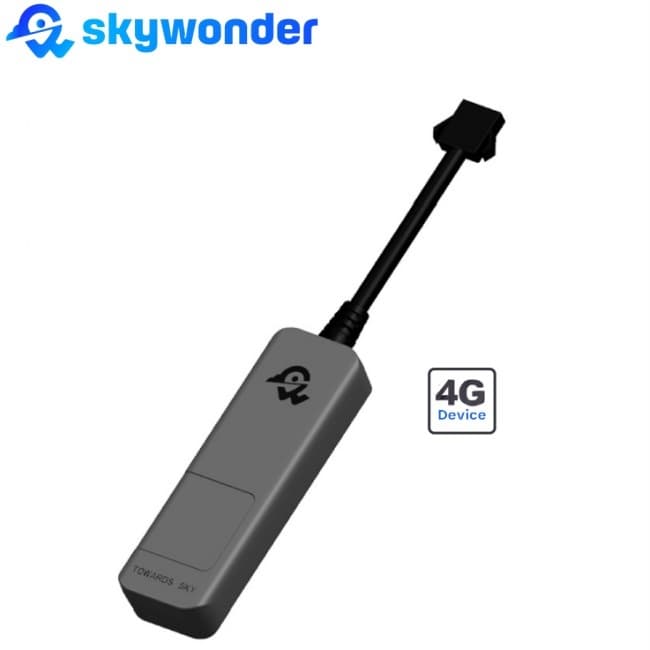
J11 Dual IP 4g Vehicle GPS Tracker
Projects that must keep reporting when one backend endpoint goes down.
Primary and backup server IPs with automatic failover, OTA updates, cached resend
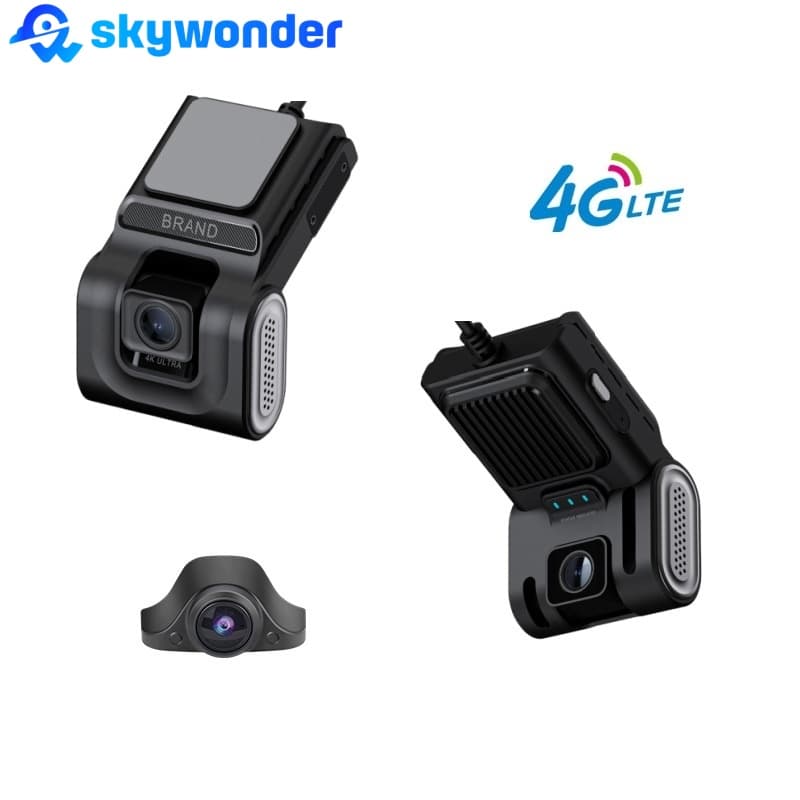
D9 4G Multi Channel AI Dashcam
Driver behaviour and road-facing evidence on a bus without a full MDVR.
ADAS (FCWS, LDWS, PCWS, HMW, FVSA) plus DMS for fatigue, smoking and camera occlusion

Wd10 4 Channel AI MDVR With ADAS DMS
Full-size buses needing four camera angles, attendance hardware and passenger counting.
Card reader and LED screen expansion, passenger flow algorithm, 256 GB SD plus 2 TB disk
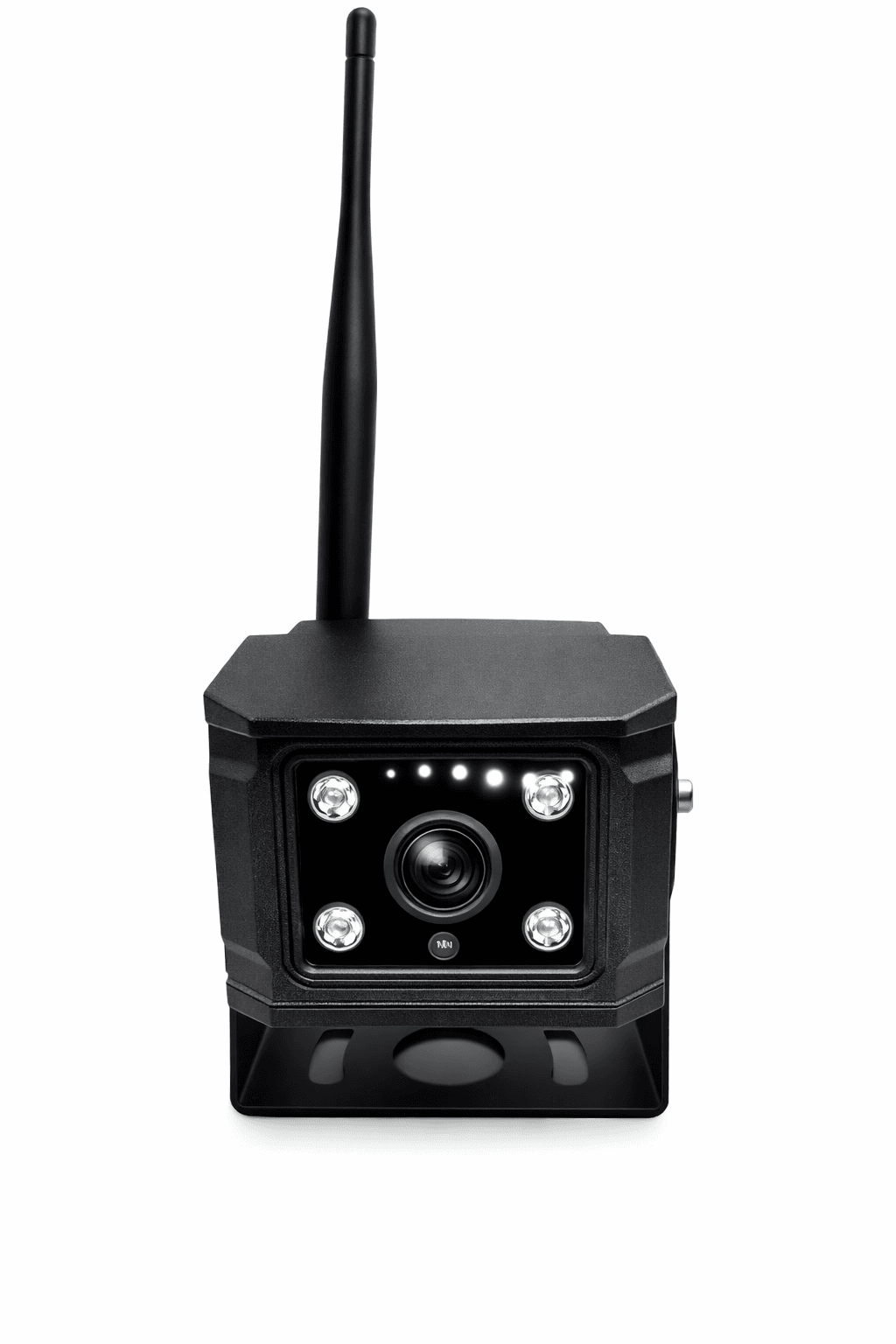
S202 4G Single channel AI Camera
Single-camera upgrade where a tender asks for DMS but not multi-channel video.
1080p with IR-CUT night vision, DMS and BSD, two-way intercom, under 5 W
Test before you commit
Order 3–10 sample units and evaluate them on your own platform or on Traqcare before placing a production order.
Parent and school apps on a white-label platform
Hardware loses tenders on the app, not the box. Skywonder devices run on Traqcare, a web app with iOS and Android clients, white-labelled with the customer brand, logo, app name and domain.
It covers live tracking, route playback, alerts, geofences, fuel management, reports, device management and user roles. Documentation sits at docs.traqcare.com.
Arrival alerts parents trust
Every stop becomes a geofence, and entry or exit events fire an alert. A parent is alerted when the bus leaves school and again when it reaches their stop.
Set the radius to the stop, not the street, or the alert arrives before the bus is visible.
Playback for disputes
Route playback answers next-morning questions: arrival time at the gate, idle duration, approved route or not. The GT10 and J11 raise reporting frequency through sharp turns, so the replayed line follows the road.
Roles and platform choice
User roles let one deployment serve three audiences: parents see one bus, the office sees every route, the operator sees the fleet.
Resellers with their own stack can run the hardware elsewhere: trackers speak GT06, video units speak JT/T 808, and both are compatible with third-party platforms such as Traccar, Wialon, Navixy and GPS-Trace. See platform options and the developer notes.
Compliance and tender checklist
Use this before submitting a bid or signing a supply contract. Each line has decided a tender.
- Which state notification applies, and does it extend AIS-140 to school buses there?
- Is the device empanelled with that state VLTD backend, or is empanelment inside the project scope?
- Is NavIC implemented in the positioning chipset on the India-bound build, not only in firmware?
- Is the panic button hard-wired and reachable by a passenger, rather than a software button?
- Does the tender require simultaneous reporting to two backends, or is failover between a primary and backup IP acceptable?
- Is RFID attendance in scope? If so the bill of materials needs an MDVR with card reader expansion, not a plain tracker.
- What video retention is specified, and does the storage configuration meet it at the required channel count and bitrate?
- Who owns the SIM contract, and which radio and import approvals (WPC ETA, BIS, TEC) does your brand trigger once the device is rebranded?
- Warranty and returns: a 12-month manufacturer warranty on hardware covering manufacturing defects, and 30-day returns on unopened standard products with buyer-paid return shipping. Custom and white-label products are non-returnable.
How a school bus rollout runs
A first deployment is one route, then a term, then the fleet. Compressing that sequence is where projects fail, because the parent app takes more tuning than the hardware does.
- 1
Scope the state and the specification
Confirm which state rules apply, whether school buses are in scope, and what the backend expects. Pick the tier from the attendance and video requirements, not the price sheet.
- 2
Order samples
Sample orders run 3-10 units and ship within 5-7 business days by express courier. Test the panic-button wiring, the geofence alerts and the real bitrate at your recording settings.
- 3
Pilot one route
Fit one bus, enrol ten parents and run a full school week. Tune the geofence radius at each stop and check that alert timing matches what parents see.
- 4
Brand the platform
Apply the brand, logo, app name and domain to the Traqcare web app and the mobile builds, then set user roles before the fleet goes live.
- 5
Certify and empanel
Run the AIS-140 approval path for the state, including empanelment and a live test alert, before the RTO fitment appointments. Budget integration time per state.
- 6
Scale the fleet
In-stock models ship in 3-7 days; custom and high-volume runs take 15-25 days after deposit. Order the fleet while the pilot runs if the term start is fixed.
- 7
Review each term
Pull overspeed and DMS reports per driver at term end and check retention against the tender figure. Fix the recording profile before an incident proves it wrong.
Get a volume quote
Tell us the models, quantity and destination country. Quotes usually come back within one business day.
The reseller angle in India
School transport is a recurring, regulation-driven business rather than a one-off sale. Vehicles keep getting registered, devices need replacement, and each new state reopens the empanelment question.
The same stock also resells into fleet-video and contract-vehicle work, where the buyer is a haulier or a cold-chain operator rather than a school; the logistics and cold chain solution covers that side.
That favours resellers who hold stock and turn a state integration around quickly. Skywonder has built telematics hardware in Shenzhen since 2011: a 5,000+ m2 factory, 200+ staff including 30+ R&D engineers, 20M+ units dispatched to date, ISO 9001, 100+ countries served.
What the program covers
- White-label hardware and platform from 100 units; MOQ is 50-100 units by model, as set out in the MOQ guide.
- Your brand on the device, the packaging, the apps and the domain. Details are on the reseller program page.
- Technical integration support for backend work: the GT06 protocol on trackers, JT/T 808 on video units.
- Import guidance for Indian distributors in the China import guide; payment terms and Incoterms are quoted per order.
How to start
Sales runs on WhatsApp because that is how distributors in India, Nigeria and Mexico work. Send the state, the bus count and whether attendance is in scope, and we come back with a hardware list.
For a written brief the lead form reaches the same team, and the MDVR catalogue lists every video unit. Pricing is quoted per model and volume.
Talk to a sales engineer on WhatsApp
Fastest way to get model recommendations, MOQ and lead times for your market.
Frequently asked questions
Is a Skywonder device AIS-140 certified?+
No. Skywonder publishes no AIS-140, ARAI or ICAT certificate against any SKU here, so treat certification as project scope and check local regulations with the state RTO. The published path runs through type approval, Conformity of Production, then per-state empanelment.
Do school buses have to comply with AIS-140?+
It depends on the state. AIS-140 is written for transport vehicles, and school buses fall inside the mandate where a state notification extends it to them. Scope, timing and the device specification all vary, so check local regulations for the state of registration rather than assuming a national rule.
Does the panic button have to be hard-wired?+
AIS-140 as published describes a hard-wired physical emergency button rather than a software or app button; check local regulations for the state requirement. On Skywonder hardware that means a tracker with a built-in SOS key, such as the GT10, or the optional SOS alarm input line on the GX7, wired to a cabin button.
Which device supports RFID student attendance?+
Only units with a card reader interface. The WD10 and WD11 MDVRs both list card reader expansion alongside fuel level sensors and LED screens, and the D12 lists dual RS232 ports for RFID readers. A plain tracker lists no card reader input, so see the product page for the full specification.
What is the difference between certification and state empanelment?+
Central type approval from ARAI or ICAT confirms the device meets AIS-140. State empanelment registers that device with one state VLTD backend so its data format is accepted. A certified device can still be rejected at an RTO if it is not empanelled there, so clear both gates.
Can we run the buses on our own tracking platform?+
Yes. Trackers report over the GT06 protocol and the dashcams and MDVRs use JT/T 808, and both are compatible with third-party platforms such as Traccar, Wialon, Navixy and GPS-Trace. Resellers wanting a branded stack without building one can use the white-label Traqcare apps.
Get a volume quote
Tell us the models, quantity and destination country. Quotes usually come back within one business day.