
GPS Tracking for Agriculture: Tractors, Farm Equipment and Livestock
What GPS tracking does on a farm, how it differs from tractor guidance, which tracker fits which machine, and how to roll it out on a farm, contractor fleet or dealer book.
Winnie Huang
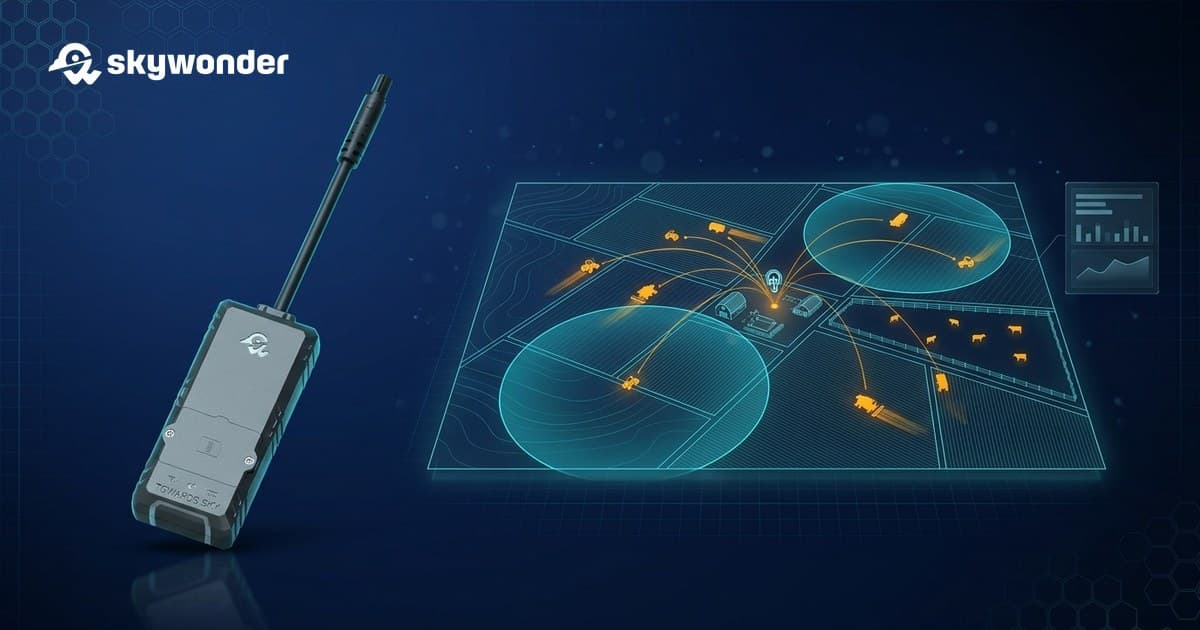
Short answer: GPS tracking for agriculture means fitting a GPS tracker to tractors, harvesters, implements, farm vehicles and livestock, then watching location, movement and alarms on a map or phone. It covers theft recovery, engine hours, contractor billing and herd location. It is not tractor guidance: autosteer and yield mapping need a separate high-accuracy receiver. Hardwired trackers suit machines with a battery; solar or long-standby trackers suit implements, pumps and trailers that have none.
Search for "agriculture GPS tracking" and you get two different topics in one result page: tracking a machine so you know where it is, and using satellite positioning to steer it across a field. Farm owners, contractors and dealers who want a tracker are usually asking the first question, and most guides answer the second.
This guide separates the two, then covers what a farm tracker does, which tracker goes on which asset, how it behaves where mobile coverage is thin, and how to roll it out. It is written by the team that builds the trackers at SKYWONDER, so the device advice is specific. The full device range with specifications sits on the agriculture tracking solution page.
How is GPS used in farming?
GPS is used on farms in five main ways. Only the first and last are tracking in the sense of this guide; the middle three are precision-agriculture tools that need different hardware.
Equipment and fleet tracking
A tracker on a tractor, harvester, sprayer or farm pickup reports where it is, whether the engine is running and whether it has moved when it should not have. This is the use that pays back through theft recovery, fewer idle hours and accurate contractor invoices.
Guidance and autosteer
Guidance systems steer the machine along straight, repeatable passes, so rows are not overlapped or missed. They use a high-accuracy receiver with a correction signal, usually called RTK, and they are fitted by machinery dealers. A standard tracker does not do this and is not meant to.
Yield mapping and variable-rate application
Harvesters log yield against position, and sprayers or spreaders vary the dose by zone from that map. The data comes from the machine's own sensors; a tracker adds the fleet view around it, not the agronomy.
Field sampling and scouting
Soil samples and crop checks are tied to exact coordinates so you can return to the same spot next season. A phone or handheld receiver is enough for most of this work.
Livestock location
A sealed collar tracker shows where cattle, goats or camels are and raises an alarm when an animal leaves a fenced zone. This suits large ranches and regions where stock theft is common.
What is the difference between GPS tracking, guidance and factory telematics?
Buyers often assume one system does all three. It does not, and buying the wrong one is the most common mistake we see on agricultural quotes.
| System | What it answers | Hardware | Typical position accuracy | Who fits it |
|---|---|---|---|---|
| GPS tracker | Where is the machine, is it running, has it moved, did the battery get cut? | Small wired, solar or battery unit with a SIM | Metres, enough to place a machine in a field or yard | You, your installer or a reseller |
| Guidance and autosteer | Can the machine drive the next pass accurately? | High-accuracy receiver, correction signal, steering kit | Centimetre-level with correction | Machinery dealer |
| Factory telematics | How is this one brand of machine performing? | Built in by the manufacturer | Varies by brand | Manufacturer, often on a subscription |
Factory telematics covers one brand at a time. A farm with a mixed fleet, a contractor with hired-in machines or a dealer with equipment on finance still needs one tracker platform across every make. That is where an independent tracker earns its place.
Tell us what you need to track
Send us your asset list: machine types, supply voltage, country and number of units. We reply with the right tracker class for each asset and the radio variant for your network.
Request a QuoteWhat can GPS tracking do for a farm or agricultural contractor?
- Stop and recover theft. Tractors, pumps and trailers are taken from open fields at night. A geofence around the farm and a movement alarm tell you within minutes, with a live position to give the police.
- Count engine hours. A wired tracker reads ACC (ignition) state, so each machine has real running hours for service intervals and contractor billing.
- Find idle machines. A fleet map and a utilisation report show which tractors worked this week and which sat in the yard.
- Secure equipment on hire or finance. Dealers and lenders track machines the way a car lender does; see the auto finance tracking workflow.
- Prove the work was done. Route playback shows which fields a contractor actually covered and when.
- Warn before a unit goes silent. Low-voltage and low-battery alerts mean a tracker does not die in the middle of the season.
Which GPS tracker goes on which farm machine?
The right tracker depends on whether the asset has a battery. Powered machines get a wired unit; everything else needs a tracker that carries its own energy.
| Asset | Has power? | Tracker class | Models |
|---|---|---|---|
| Tractor, harvester, sprayer rig, farm pickup | Yes, 12 V or 24 V | Hardwired, ignition and power-cut alarms | GT06 4G, GX3, J10 (2G regions) |
| Irrigation pump, pivot, generator | No, outdoors | Solar-charged, sealed against rain | Y8 |
| Trailer, baler, seed drill, tank | No, often stored for months | Long-standby battery | W09, W10 |
| Machine on hire or on loan | Varies | Magnetic battery unit, fitted in seconds | GT76, SW05 |
| Cattle, goats, camels | No | Sealed collar with fence alarm | V55 |
Two checks before you order. Tractors and harvesters run 12 V or 24 V systems, so give the supply voltage on the quote. And confirm the radio variant for your country: the GT76 datasheet lists 2G bands, so check that 2G still runs on your network. The band lists are in the 4G GPS tracker guide, and the trade-offs between wired and battery units are covered in wired versus wireless asset trackers.
Does a GPS tracker work on a farm with weak mobile coverage?
Yes, within limits. A tracker finds its position from satellites, which does not need mobile signal, but it reports that position over the mobile network, which does. Three settings decide how well it works at the edge of coverage.
- The radio. Choose the LTE band variant for your country and keep 2G fallback where the operator still runs it. See choosing between 4G, 3G and 2G.
- The reporting interval. A fix every few hours is enough for a pump and stretches battery standby to months or years. A machine on hire may justify hourly fixes.
- Blind-area buffering. Wired units store positions while out of coverage and upload them when the signal returns, so the track is complete even if the field has no signal.
Where there is no mobile coverage at all, no tracker can report live. The practical answer is a unit that buffers, plus a geofence where the asset re-enters coverage on a road.
How do you stop farm equipment theft with GPS?
A tracker does not prevent a theft by itself. It shortens the time between the theft and the response, and that is what makes recovery likely. Set it up in this order:
- Draw a geofence around each yard and field. An exit alarm at night is the signal that matters most.
- Turn on movement and vibration alarms for implements and trailers that should never move after hours.
- Turn on power-cut and tamper alarms. A thief who pulls the battery lead or prises off a unit triggers the alert at that moment.
- Decide who gets the alarm. Send night alerts to a person who will act, not to a shared inbox.
- Keep the live link ready. Share the live position with the police instead of describing where the machine was last seen.
The same alarm logic applies to cars and trucks; the anti-theft device guide compares the options. Where a relay is wired in, a unit such as the J10 can also cut fuel remotely.
How do you roll out GPS tracking across a farm, contractor fleet or dealer book?
- List assets by class. Powered machines, unpowered implements and livestock each need a different device and reporting interval.
- Order samples for each class. Samples of 3 to 10 units ship in 5 to 7 business days by express courier. Fit one wired unit, one solar or standby unit and, if relevant, one collar, on your own SIMs.
- Set the reporting plan. Choose intervals per class, draw geofences, and name the person who receives night alarms.
- Install in one visit per site. Wired units need an installer; battery units are screw- or magnet-mounted by farm staff in minutes.
- Hand over the platform. Create an account per farm or member and load the asset names. On Traqcare a co-operative sees every machine while each member sees only their own.
- Scale the order. First production orders start at the model MOQ of 50 to 100 units; in-stock models ship in 3 to 7 days.
Every SKYWONDER tracker uses the GT06 protocol, so units also run on Traccar, Wialon, Navixy and GPS-Trace if you already have a server. The GT06 protocol guide and the developer hub cover the integration.
Can a dealer or reseller sell farm GPS tracking?
Yes, and dealers and co-operatives are the usual buyers in volume. They already have the farm relationships and the installers, and farm tracking suits recurring revenue.
A simple way to size it: with N trackers in the field and a platform fee of M per device per month, recurring revenue is N times M each month, before the hardware margin H on the first sale. A dealer who attaches a tracker to every machine sold on finance builds N steadily and adds loan security at no extra effort. Pricing is quoted per model and volume, so ask for the figures for your market.
The reseller programme covers white-label from 100 units, where the platform and mobile apps carry your logo, colours and domain. If you are new to the model, start with how to start a GPS tracking business and the white-label GPS tracker guide. Certifications across the range are CE, FCC, PTCRB, IC, RoHS and REACH, and per-model certificates are on the certifications page.
See the agriculture tracker range
Specifications, model comparison and ordering details for tractor, implement and livestock trackers, on one page.
View Agriculture TrackersFrequently Asked Questions
What is the best GPS tracker for a tractor?
A hardwired unit that reports ignition state and raises an alarm when its power is cut. The GT06 4G is the baseline for 4G markets, the J10 covers regions where 2G is still the reliable network, and the GX3 adds low-voltage and power-outage alarms for machines that sit idle for weeks between jobs.
How do I track farm equipment that has no battery?
Use a tracker that carries its own power. The Y8 charges from a solar panel and is sealed for outdoor use. The W09 runs up to three years on its battery pack at a slow reporting schedule. The GT76 and SW05 are magnetic battery units for equipment that needs a tracker fitted in seconds.
Can GPS trackers work on farms with weak mobile coverage?
Yes, within limits. Choose the right LTE band variant with 2G fallback, set a longer reporting interval, and rely on buffering: wired units store positions while out of coverage and upload them when signal returns. Where there is no coverage at all, no tracker can report live.
Is GPS tracking the same as tractor guidance or autosteer?
No. A tracker tells you where a machine is and whether it is running, to within metres. Guidance steers the machine along accurate passes and needs a high-accuracy receiver with a correction signal, fitted by a machinery dealer. Many farms use both, from different suppliers.
Can one system track tractors from different brands?
Yes. A tracker fitted to the machine works on any make, so a mixed fleet shows on one map. Factory telematics covers only that manufacturer's machines. Every SKYWONDER tracker uses the GT06 protocol and also runs on Traccar, Wialon, Navixy and GPS-Trace.
Is plant machinery tracking different from farm equipment tracking?
The technology is the same. "Plant machinery" is the term construction and groundworks use for excavators, loaders and rollers, and the tracker classes above apply to them too: hardwired for powered machines, solar or long-standby battery for trailers and attachments. Only the alarms and reporting intervals you choose differ.
Is there a GPS tracker for cattle and goats?
The V55 4G animal tracker is a sealed collar unit with GPS, BeiDou and Wi-Fi positioning and an electronic fence alarm that fires when an animal enters or leaves a zone. The reporting interval is set on the platform to balance battery life against how quickly a stray is noticed.
What does farm GPS tracking cost to run?
Hardware is quoted per model and volume, with a model MOQ of 50 to 100 units. Running cost is the SIM plan per unit plus the platform fee per device on Traqcare, or nothing extra if you run the trackers on your own GT06-compatible server. Request a quote with your unit count and country.
About the author
Winnie Huang is a Solution Manager at SKYWONDER Technology Co., Ltd., a Shenzhen GPS tracker, 4G dashcam and fleet-platform manufacturer founded in 2011. She works on hardware and firmware choices for fleet verticals, including agriculture, and advises dealers and resellers on which tracker class fits each asset.
Related reading
Écrit par Winnie Huang
Winnie Huang is Solution Manager at SKYWONDER Technology Co., Ltd., matching fleet, logistics, school-transport and two-wheeler requirements to hardware, firmware and the Traqcare platform. She works with partners in India, Africa, Latin America and the Middle East on samples, pilots and volume rollouts.
Articles Connexes
Voir Tous
SkywonderGPS IoT at Appliance and Electronics Show 2025 Dubai
Explore SkywonderGPS innovations at the Appliance & Electronics Show 2025 Dubai. Discover smart IoT tech in real-time GPS tracking.

Skywonder GPS Trackers Now Fully Integrated with Wialon: A New Era in Fleet Management
Skywonder GPS trackers are now integrated with Wialon, the world’s leading telematics platform. Enjoy seamless fleet tracking, real-time insights, and easy setup for smarter, safer operations.

What Is GPS and How Do Global Positioning Systems Work?
Discover what GPS is and how it works, the method used to pinpoint a location, and the top uses of GPS in navigation, safety, science, and daily life.
Restez Informé des Actualités de la Géolocalisation GPS
Recevez les derniers articles, conseils et actualités du secteur directement dans votre boîte de réception.